
Aegialites
Mannerheim, 1853
Species Guides
3- Aegialites californicus
- Aegialites debilis(narrow-waisted bark beetle)
- Aegialites subopacus
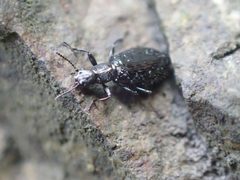
Aegialites is a of flightless narrow-waisted bark beetles in the Salpingidae, comprising approximately 13 described . Members of this genus inhabit the supralittoral zone of rocky shores, where they occupy rock crevices in intertidal environments. The genus exhibits distinctive morphological adaptations for this , including widely separated , long , and large claws. Aegialites californicus was the first species in the genus to have its complete mitochondrial sequenced, revealing AT-content of 78% and confirming its phylogenetic placement within Salpingidae.
Pronunciation
How to pronounce Aegialites: /ɛdʒiəˈlaɪtiːz/
These audio files are automatically generated. While they are not always 100% accurate, they are a good starting point.
Identification
within Aegialites can be distinguished from by several morphological features: metallic iridescence of the body, slender , wide open , and fine pronotal punctuation. The is further characterized by its flightless condition and adaptations for rocky shore , including widely separated coxae, long , and large claws.
Images
Habitat
Rocks and rock crevices in the supralittoral zone of rocky shores; intertidal environments subject to daily fluctuations in temperature, humidity, salinity, and wave exposure.
Distribution
Northern Pacific coasts: from California to Alaska in North America, and from Northern Japan to Kamchatka in Asia.
Behavior
Flightless; exhibits morphological adaptations for supralittoral rocky shore including widely separated , long , and large claws.
More Details
Mitochondrial genome
The complete mitochondrial of Aegialites californicus has been sequenced (15,899 ), containing 13 protein-coding genes, 2 rRNAs, and 22 tRNAs. Phylogenetic analysis places A. californicus as sister to other members of Salpingidae.