
Pytho seidlitzi
Blair, 1925
dead log beetle
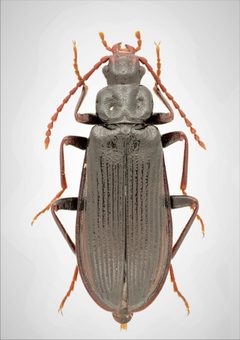
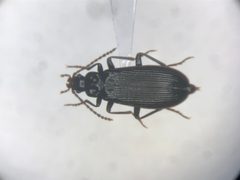
Pytho seidlitzi is a of dead log in the Pythidae, described by Blair in 1925. It is the sole member of the monophyletic P. seidlitzi species group, which is to North America. The species is part of a whose ancestors likely became associated with conifers as early as the Jurassic period. Phylogenetic studies indicate that larval characters are more important than characters for defining species groups within Pytho.
Pronunciation
How to pronounce Pytho seidlitzi: //ˈpaɪθoʊ saɪdˈlɪtsi//
These audio files are automatically generated. While they are not always 100% accurate, they are a good starting point.
Identification
of Pytho seidlitzi can be separated from other North American Pytho using keys based on 12 adult morphological characters. Larvae can be distinguished using keys based on 8 larval characters; larval synapomorphies are relatively more important than adult characters for defining the P. seidlitzi species group. The lectotype for this species was designated in a 1991 revision of the .
Images
Distribution
North America, with records from the Canadian provinces of Alberta, British Columbia, and Manitoba. The is to North America and does not occur in Europe or Asia, unlike some other Pytho species groups.
Life Cycle
Development includes larval and pupal stages; larval characters were analyzed phylogenetically but pupal characters were not analyzed due to lack of out-group material.
Similar Taxa
- Pytho nigerBoth are North American Pytho , but P. niger belongs to the P. niger species group rather than the P. seidlitzi group; distinguished by and larval morphological characters.
- Pytho planusNorth American member of the P. depressus group; differs in phylogenetic placement and morphological characters from the P. seidlitzi group.
More Details
Phylogenetic position
Pytho seidlitzi is the sole member of the P. seidlitzi group, one of four monophyletic species groups within the based on cladistic analysis of 18 morphological characters.
Type specimen
Lectotype designated in 1991 revision (Entomological Society of Canada Memoir 123).
Sources and further reading
- BugGuide
- Wikipedia
- GBIF taxonomy match
- iNaturalist taxon
- NCBI Taxonomy
- Comprehensive review of Burmese python science released
- Snake trade in Indonesia is not sustainable enough — but it could be
- NATURAL HISTORY, CLASSIFICATION, RECONSTRUCTED PHYLOGENY, AND GEOGRAPHIC HISTORY OF PYTHO LATREILLE (COLEOPTERA: HETEROMERA: PYTHIDAE)