
Pedilus elegans
(Hentz, 1830)
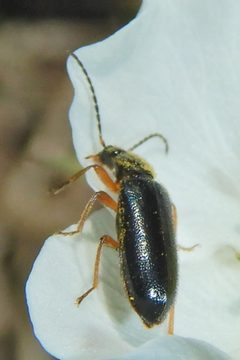
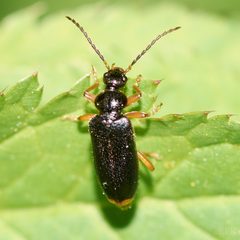
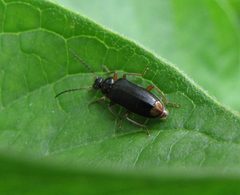
Pedilus elegans is a of cardinal in the Pyrochroidae, first described by Hentz in 1830. It is a small to medium-sized beetle distributed across eastern and central Canada. Like other members of Pyrochroidae, it is characterized by soft and typically exhibits red or orange and black coloration. The species has been documented in Manitoba, New Brunswick, Ontario, and Quebec based on occurrence records.
Pronunciation
How to pronounce Pedilus elegans: //ˈpɛ.dɪ.lʊs ˈɛ.lɪ.ɡəns//
These audio files are automatically generated. While they are not always 100% accurate, they are a good starting point.
Identification
Distinguished from other Pyrochroidae by subtle morphological features of the , pronotum, and male genitalia; precise identification typically requires examination of specimens. Separated from the related Pyrochroa by smaller size and more eastern distribution in North America. Difiers from Pedilus terminalis and other by details of antennal structure and body proportions.
Images
Appearance
Soft-bodied with flexible typical of Pyrochroidae. Coloration generally includes red or orange and black patterning, though specific details for this are not well documented. are thread-like. Body form is somewhat flattened and elongated compared to many other beetle .
Distribution
Eastern and central Canada: documented from Manitoba, New Brunswick, Ontario, and Quebec. The occurs in temperate deciduous and mixed forest regions.
Similar Taxa
- Pedilus terminalisOverlapping distribution in eastern North America; distinguished by antennal and male genitalia structure
- Pyrochroa speciesSimilar red-and-black coloration and soft , but larger in size and primarily Palearctic in distribution
- Schizotus speciesSame Pyrochroidae with similar general appearance; separated by antennal and pronotal characters
More Details
Taxonomic Note
The Pedilus was historically placed in the Pyrochroidae, though some older classifications treated Pyrochroidae as a of Meloidae or Tenebrionidae. Current molecular and morphological evidence supports its recognition as a distinct family within Tenebrionoidea.
Sources and further reading
- BugGuide
- GBIF taxonomy match
- iNaturalist taxon
- NCBI Taxonomy
- Bring on the Tourists! | Bug Squad
- More Nematodes in Outer Space? | Bug Squad
- Showcasing Animal and Plant Parasitic Nematodes | Bug Squad
- Don't Miss the Nematode Collection at UC Davis Biodiversity Museum Day Feb. 10 | Bug Squad
- UC Davis Speaker: Fatma Kaplan, A Go-Getter and Maybe a Genius | Bug Squad
- Bug Eric: Wasp Wednesday: Steniolia elegans