
Ditylus
Fischer, 1817
Species Guides
3- Ditylus caeruleus(false blister beetle)
- Ditylus gracilis(false blister beetle)
- Ditylus quadricollis(Cedar False Blister Beetle)
Ditylus is a of false blister beetles ( Oedemeridae) containing at least four described distributed in North America. The genus is characterized by elongated bodies and soft typical of oedemerids. One species, Ditylus quadricollis, has been studied in detail regarding its .
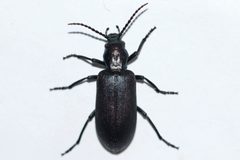
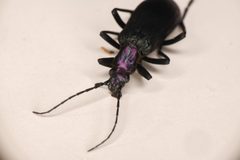
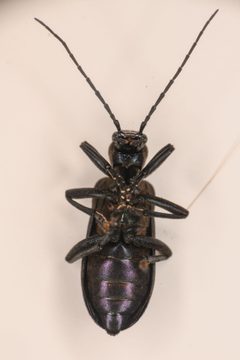
Pronunciation
How to pronounce Ditylus: /ˈdɪtɪləs/
These audio files are automatically generated. While they are not always 100% accurate, they are a good starting point.
Images
Habitat
Based on study of Ditylus quadricollis: associated with decaying hardwoods including oak, alder, and willow; larvae develop in punky wood; frequent flowers of Umbelliferae and Compositae.
Distribution
North America; records include United States (California, Vermont) and Sweden (likely introduced or misidentification).
Seasonality
Based on Ditylus quadricollis: active late spring to early summer; one-year with larval development through winter.
Diet
Based on Ditylus quadricollis: larvae feed on decaying wood and fungal mycelia; feed on pollen.
Host Associations
- Quercus (oak) - larval development substratepunky wood
- Alnus (alder) - larval development substratepunky wood
- Salix (willow) - larval development substratepunky wood
- Umbelliferae - food sourcepollen feeding
- Compositae - food sourcepollen feeding
Life Cycle
Based on Ditylus quadricollis: one-year cycle; laid in summer in wood crevices; larval development through winter; in spring; late spring to early summer. Egg stage approximately 2 weeks under laboratory conditions.
Behavior
Based on Ditylus quadricollis: and positively phototactic; frequent flowers for pollen; mating observed on flowers; larvae are wood-borers in soft decaying hardwood.
Ecological Role
Based on Ditylus quadricollis: larval stage contributes to wood decomposition in forest ; may provide pollination services at flowers.
More Details
Taxonomic notes
Four described : Ditylus caeruleus (Randall, 1838), D. gracilis LeConte, 1854, D. laevis (Fabricius, 1787), and D. quadricollis (LeConte, 1851). Detailed biological information is available only for D. quadricollis; -level generalizations should be treated cautiously.