
Sparedrus
Dejean, 1821
Species Guides
2- Sparedrus aspersus(Texas Brown Oedemerid)
- Sparedrus depressus
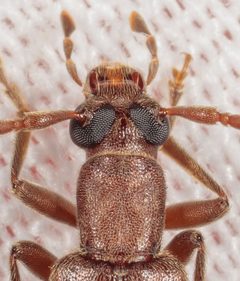
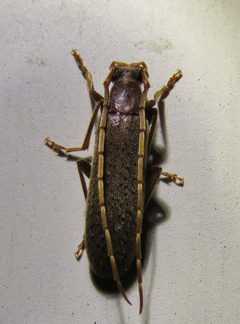
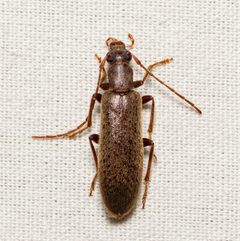
Sparedrus is a of false blister beetles in the Oedemeridae, established by Dejean in 1821. The genus comprises approximately seven described distributed across multiple biogeographic regions including the Palaearctic, Nearctic, Neotropical, and Eastern regions. Species in this genus are characterized by elongated body forms and notably long . A recent species, Sparedrus koreanus, was described from South Korea in 2025, representing the first record of the Calopodinae in that country.
Pronunciation
How to pronounce Sparedrus: /spəˈrɛdrəs/
These audio files are automatically generated. While they are not always 100% accurate, they are a good starting point.
Identification
Members of Sparedrus can be distinguished from related by several morphological features: the maxillary palpomere is securiform (axe-shaped), the is narrower than the width of the first antennomere, and the distinctly exceed body length. These characteristics were used to diagnose Sparedrus koreanus and are applicable to genus-level identification.
Images
Habitat
Riverside areas; at least one has been collected in urban riverside environments using LED light traps.
Distribution
The Sparedrus is distributed across the Palaearctic, Eastern, Nearctic, and Neotropical regions. Approximately 30 occur in the Palaearctic Region, with greatest diversity from Europe through the Middle East. East Asian records are scarce. Documented species occurrences include: South Korea (Sparedrus koreanus), Europe and Mediterranean region (Sparedrus orsinii, S. testaceus), and North America (Sparedrus aspersus, S. depressus).
Behavior
activity has been observed, with specimens attracted to LED lights during evening hours.
More Details
Taxonomic placement
Sparedrus belongs to the Calopodinae within Oedemeridae. Phylogenetic analysis based on COI gene sequences has confirmed the placement of Sparedrus koreanus within this .
Species diversity
While sources cite approximately seven described , the is more diverse in the Palaearctic Region with approximately 30 species reported. The discrepancy reflects ongoing taxonomic work and regional cataloging differences.