
Calopodinae
A. Costa, 1852
Genus Guides
2Calopodinae is a of false blister beetles (Oedemeridae) characterized by elongated body forms and often pronounced in . The subfamily includes the Sparedrus, which has a broad intercontinental distribution across the Palaearctic, Nearctic, and Neotropical regions. Recent work has documented the first occurrence of this subfamily in South Korea, expanding its known Asian distribution.
Pronunciation
How to pronounce Calopodinae: /ˌkæloʊpoʊˈdaɪniː/
These audio files are automatically generated. While they are not always 100% accurate, they are a good starting point.
Identification
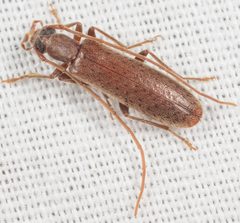
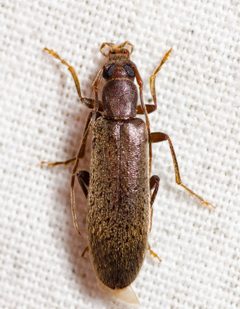
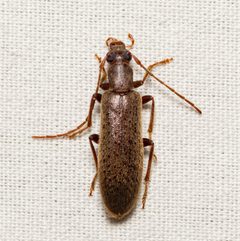
Members of Calopodinae can be distinguished from other Oedemeridae by their elongated, subparallel body shape. Males typically possess that strongly exceed the elytral apex, a trait particularly pronounced in Sparedrus. often exhibit reddish-brown coloration with dense yellowish .
Images
Habitat
Riverside areas; at least one collected near urban waterways under artificial lighting.
Distribution
The Sparedrus, representative of the , occurs across the Palaearctic (30+ ), Nearctic, and Neotropical regions. The subfamily has been documented in South Korea (Daegu), representing its first confirmed record in East Asia.
Behavior
are attracted to LED lights. This phototactic is consistent with -level patterns in Oedemeridae.
Similar Taxa
- NacerdinaeAnother of Oedemeridae; Calopodinae distinguished by more elongated body form and male exceeding elytral apex
- OedemerinaeLargest of Oedemeridae; Calopodinae differs in body shape and antennal proportions
More Details
Phylogenetic placement
COI-based places Sparedrus koreanus in close relationship with S. testaceus from North America, supporting trans-Pacific biogeographic connections within the .