
Mordella mexicana
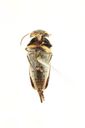
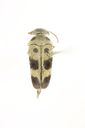
Mordella mexicana is a of tumbling flower beetle in the Mordellidae, first described in 1891. Like other members of the Mordella, it is characterized by an elongated, wedge-shaped body form and the ability to tumble or jump when disturbed—a defensive facilitated by its body shape and strong hind legs. The species belongs to the superfamily Tenebrionoidea, a diverse group of beetles with varied ecological roles. Specific details regarding its distribution, preferences, and remain poorly documented in the available literature.

Pronunciation
How to pronounce Mordella mexicana: //mɔːrˈdɛlə ˌmɛksɪˈkɑːnə//
These audio files are automatically generated. While they are not always 100% accurate, they are a good starting point.
Identification
Mordella are distinguished from other Mordellidae by their elongated, wedge-shaped body and pointed abdominal tip. Within the , species-level identification requires examination of fine morphological details such as antennal segment proportions, punctation patterns on the , and male genitalia. M. mexicana specifically would require comparison with or authoritative revisions of the genus.
Images
Distribution
The specific geographic range of Mordella mexicana is not well-documented in the provided sources. The epithet 'mexicana' suggests a possible association with Mexico, though this cannot be confirmed without additional distributional records.
Behavior
Members of the Mordellidae are known for their characteristic tumbling when disturbed—using their wedge-shaped body and strong hind legs to execute rapid, erratic jumps that make them difficult for to capture. Whether M. mexicana exhibits this behavior specifically has not been directly observed in the available sources.
Ecological Role
As a member of Mordellidae, likely contributes to flower visitation and pollen transfer, though specific ecological functions for this are undocumented.
Similar Taxa
- Other Mordella speciesShare the characteristic wedge-shaped body, pointed , and tumbling ; require detailed morphological examination to distinguish
- Other Mordellidae genera (e.g., Mordellistena, Tomoxia)Similar body plan and , but differ in body proportions, antennal structure, and abdominal shape
More Details
Taxonomic history
Described in 1891, but subsequent taxonomic treatment and modern revision status are not documented in the available sources.