
Mordella lunulata
Helmuth, 1865
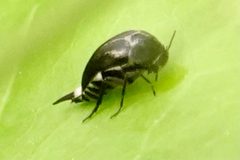
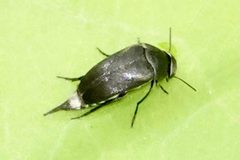
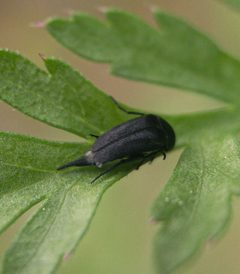
Mordella lunulata is a of tumbling flower beetle in the Mordellidae, first described in 1865. Like other members of its , it exhibits the characteristic wedge-shaped body form and enlarged hind legs that enable the tumbling escape for which the family is named. The species is known from North America, though specific details about its and remain poorly documented.
Pronunciation
How to pronounce Mordella lunulata: //mɔrˈdɛl.lə luː.nʊˈlaː.tə//
These audio files are automatically generated. While they are not always 100% accurate, they are a good starting point.
Identification
Mordella lunulata can be distinguished from other Mordella by its specific pattern of markings, including the lunulate (crescent-shaped) markings referenced in its specific epithet. Accurate identification requires examination of subtle differences in elytral , coloration patterns, and genitalic compared to such as Mordella marginata and Mordella atrata.
Images
Distribution
North America (present, specific range details not well documented)
Behavior
As a member of Mordellidae, Mordella lunulata likely exhibits the characteristic tumbling —using enlarged hind legs to execute erratic, tumbling jumps when disturbed. This antipredator mechanism is a -wide trait.
Similar Taxa
- Mordella marginataOverlaps in distribution and general body form; requires careful examination of elytral margin characters and color pattern to distinguish
- Mordella atrataSimilar dark coloration and body shape; separation depends on detailed comparison of surface and genitalia
More Details
Taxonomic history
The was described by Helmuth in 1865, making it one of the earlier described members of the Mordella. The specific epithet 'lunulata' refers to crescent-shaped markings characteristic of this species.