
Zonitis bilineata
Say, 1817
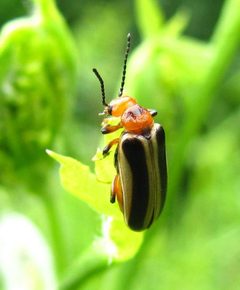
Zonitis bilineata is a of blister beetle in the Meloidae, first described by Thomas Say in 1817. It is distributed across North America, with records from Canada (Ontario, Québec) and the United States (Vermont). The species belongs to the Zonitis, which comprises small to medium-sized blister beetles. Like other meloids, it possesses chemical defenses and has larvae that are parasitic or predatory on other insects.
Pronunciation
How to pronounce Zonitis bilineata: /zɔˈnaɪtɪs bɪlɪˈniːətə/
These audio files are automatically generated. While they are not always 100% accurate, they are a good starting point.
Images
Distribution
North America. Specific records include Ontario and Québec in Canada, and Vermont in the United States. The is present across the continent based on GBIF and iNaturalist data.
Host Associations
- bee eggs - larval food sourceLarvae have been observed feeding on
More Details
Taxonomic history
First described by Thomas Say in 1817, making it one of the earlier described North American blister beetles
Observation frequency
As of the source data, there were 329 observations recorded on iNaturalist, indicating it is not uncommonly encountered but not among the most frequently observed meloids
Sources and further reading
- BugGuide
- Wikipedia
- GBIF taxonomy match
- iNaturalist taxon
- Meloidae Holdings | Entomology Research Museum
- Midget male meloid mates with mega mama | Beetles In The Bush
- Bug Eric: October 2014
- Bug Eric: New Mexico Dragonfly Blitz - Day 1
- Bug Eric: City Nature Challenge 2023 Recap
- P.M. Pollinators: Study Shines Light on Nocturnal Insects' Role in Apple Production