
Meloe campanicollis
Pinto & Selander, 1970
Meloe campanicollis is a of blister beetle ( Meloidae) described by Pinto & Selander in 1970. It belongs to the Meloe, commonly known as oil beetles, which are characterized by their flightless , shortened , and parasitic larval stages that target ground-nesting bees. The species is found in North America, though specific details about its distribution, , and remain poorly documented in published literature.
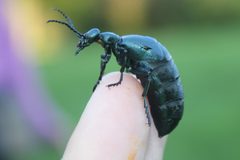
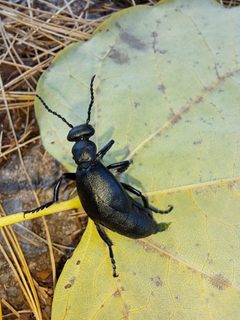
Pronunciation
How to pronounce Meloe campanicollis: //ˈmɛloʊ i kæmpənaɪˈkoʊlɪs//
These audio files are automatically generated. While they are not always 100% accurate, they are a good starting point.
Images
Distribution
North America. The is recorded from North America based on museum holdings and taxonomic databases, but specific geographic range details within the continent are not clearly documented in available sources.
More Details
Taxonomic Note
Meloe campanicollis was described by entomologists John D. Pinto and Richard B. Selander in 1970. The specific epithet 'campanicollis' refers to a bell-shaped neck or pronotum, a morphological feature used in distinguishing this from .
Sources and further reading
- BugGuide
- Wikipedia
- GBIF taxonomy match
- iNaturalist taxon
- Meloidae Holdings | Entomology Research Museum
- The Amazing Bee-Parasite Research of Leslie Saul-Gershenz | Bug Squad
- Ground nesting bees beware of blister beetles - Meloe spp. — Bug of the Week
- Blistering beetles - Meloe spp. — Bug of the Week
- Springing into action – oil beetles and citizen science! - Buglife Blog - Buglife