
Lytta childi
LeConte, 1857
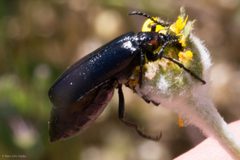
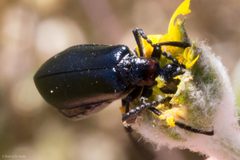
Lytta childi is a blister beetle in the Meloidae, classified within the subgenus Poreospasta of the Lytta. The was described by LeConte in 1857 and is known from western North America. Like other Lytta species, it produces , a defensive compound toxic to vertebrates. The species is represented in museum collections with 126 specimens at the Entomology Research Museum, indicating it is moderately well-collected but not extensively studied in published literature.
Pronunciation
How to pronounce Lytta childi: /ˈlɪtə ˈtʃaɪldi/
These audio files are automatically generated. While they are not always 100% accurate, they are a good starting point.
Images
Distribution
Western North America; specifically recorded from the southwestern United States and adjacent regions of Mexico. The occurs in arid and semi-arid environments typical of the Lytta.
Human Relevance
Like other blister beetles in the Lytta, L. childi produces , a potent blistering agent. If handled roughly or crushed against skin, the can cause chemical burns. Cantharidin-contaminated hay has caused lethal poisoning in horses and other livestock. The genus Lytta includes the European L. vesicatoria, historically known as 'Spanish fly,' which has been used medicinally and as an aphrodisiac—though with frequently toxic results.
Similar Taxa
- Lytta auriculataBoth belong to the subgenus Poreospasta and share western North American distributions; L. auriculata is more broadly distributed and abundant (785 specimens vs. 126 in museum holdings)
- Lytta magisterSimilar size and coloration; however, L. magister belongs to subgenus Paralytta and is distinguished by different pronotal and elytral sculpturing patterns
- Lytta vulnerataOverlapping distribution and similar general appearance; L. vulnerata is distinguished by characteristic elytral sculpturing patterns and pronotal markings in most