
Epicauta cupraeola
(Dugès, 1869)
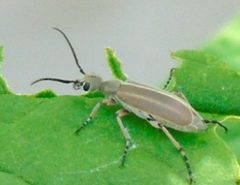
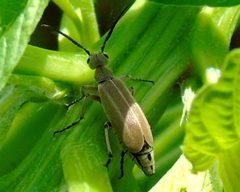
Epicauta cupraeola is a blister beetle in the Meloidae, found across Central America and North America. As a member of the large Epicauta, it possesses the chemical defense characteristic of meloid beetles: , a bitter, toxic terpenoid compound. The species was described by Dugès in 1869 and is represented by 209 specimens in the Entomology Research Museum's Meloidae holdings. Like other Epicauta species, are likely plant-feeders, though specific associations for this species have not been documented.
Pronunciation
How to pronounce Epicauta cupraeola: /ɛpɪˈkaʊtə kjuːpriˈoʊlə/
These audio files are automatically generated. While they are not always 100% accurate, they are a good starting point.
Images
Distribution
Central America and North America. Distribution records from GBIF confirm presence in both Middle America and North America. The is represented in museum collections with 209 specimens, indicating it is not rare within its range.
Human Relevance
As with other Epicauta , E. cupraeola likely contains and could pose a risk to livestock if present in hay, though no specific documentation of this has been found for this species. The Epicauta includes some of the most important blister beetle pests of alfalfa in North America.
More Details
Specimen holdings
The Entomology Research Museum at the University of California, Riverside holds 209 specimens of Epicauta cupraeola as of 2010, indicating substantial collection effort and suggesting the is moderately common within its range.
Taxonomic authority
The was described by Dugès in 1869, placing it among the earlier-described members of the Epicauta.