
Prothalpia
LeConte, 1862
Species Guides
2Prothalpia is a of false darkling beetles in the Melandryidae, established by LeConte in 1862. The genus contains at least four described distributed across North America and East Asia. Members of this genus are small to medium-sized beetles associated with decaying wood and forest . The genus is part of the diverse of saproxylic beetles that contribute to wood decomposition processes.
Pronunciation
How to pronounce Prothalpia: /proʊˈθælpiə/
These audio files are automatically generated. While they are not always 100% accurate, they are a good starting point.
Identification
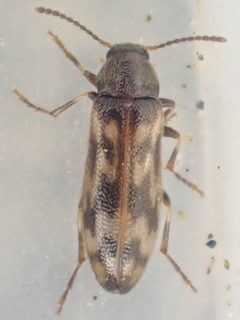
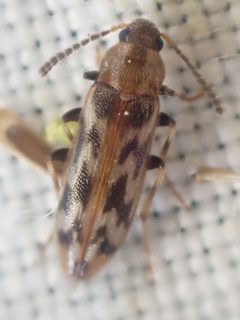
Prothalpia can be distinguished from other Melandryidae by their compact body form and characteristic elytral patterns. The genus name Prothalpia reflects historical taxonomic placement near the genus Thalpia. Species-level identification requires examination of male genitalia and detailed elytral . Prothalpia undata is recognizable by its wavy elytral markings, as indicated by its specific epithet.
Images
Habitat
in this are found in forested environments, particularly in association with decaying wood and dead standing trees. They occupy the saproxylic , utilizing decomposing woody substrates for larval development. specificity varies among species, with some showing preferences for particular decay stages or tree species.
Distribution
The has a disjunct distribution spanning North America and East Asia. Prothalpia undata occurs in western North America. Prothalpia holmbergi and Prothalpia utakoae are recorded from Japan. Prothalpia rausuana is known from the Russian Far East.
Ecological Role
As saproxylic beetles, members of this contribute to wood decomposition and nutrient cycling in forest . Their larvae develop within decaying wood, facilitating the breakdown of lignocellulosic material. They serve as prey for other forest-dwelling and small vertebrates.
Human Relevance
Prothalpia have no documented direct economic importance to humans. They may serve as indicators of forest health and dead wood quality in ecological monitoring programs.
Similar Taxa
- ThalpiaHistorically related from which Prothalpia was separated; both share similar body plans and saproxylic habits within Melandryidae
- OrchesiaAnother of false darkling beetles with similar size and preferences; distinguished by antennal structure and elytral form
More Details
Taxonomic History
The was erected by John Lawrence LeConte in 1862 with Prothalpia undata as the type . The name Prothalpia indicates its perceived relationship to the genus Thalpia. The inclusion of Japanese species (P. holmbergi, P. utakoae) and the Russian species P. rausuana indicates a trans-Pacific distribution pattern seen in several groups with boreo-temperate affinities.
Species Composition
The four recognized are: Prothalpia holmbergi (Mannerheim, 1852) from Japan, Prothalpia rausuana from Russia (Sakhalin/Kuril region), Prothalpia undata LeConte, 1862 from western North America, and Prothalpia utakoae Sasaji, 1988 from Japan. The disjunct distribution suggests potential cryptic diversity or historical vicariance patterns warranting further study.