
Phryganophilus collaris
LeConte, 1859
Collared False Darkling Beetle
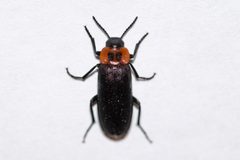
A small in the Melandryidae, recognized by the distinctive pale pronotal collar that contrasts with its darker body. The occurs across northern and western North America, with records from and montane regions of Canada. Like other melandryids, it is associated with decaying wood and fungal . The specific epithet and both reference the contrasting light-colored band across the pronotum.
Pronunciation
How to pronounce Phryganophilus collaris: //ˌfrɪɡəˈnɒfɪləs kəˈlɛərɪs//
These audio files are automatically generated. While they are not always 100% accurate, they are a good starting point.
Identification
Distinguished from other Phryganophilus and similar small darkling beetles by the pale, contrasting collar on the pronotum. The body is elongate and somewhat flattened. are . Specific separation from requires examination of male genitalia and detailed pronotal structure.
Images
Habitat
Associated with and montane forest environments. Likely inhabits decaying wood, fungal fruiting bodies, and other moist, decomposing organic matter typical of melandryid beetles.
Distribution
Recorded from western and northern Canada: Alberta, British Columbia, New Brunswick, Nova Scotia, and Northwest Territories.
Ecological Role
Member of the saproxylic , contributing to decomposition of wood and fungal material in forest .
Similar Taxa
- Other Phryganophilus speciesSimilar body form and ; distinguished by pronotal coloration pattern and genitalic structure
- Small darkling beetles (Tenebrionidae)Similar size and general appearance; distinguished by antennal structure and tarsal formula