
Ischalia californica
Van Dyke, 1938
broad-hipped flower beetle
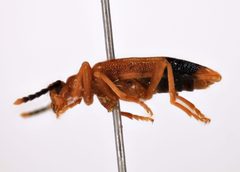
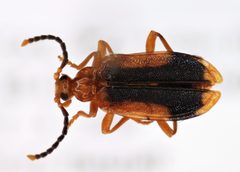
Ischalia californica is a of broad-hipped flower beetle in the Ischaliidae, described by Van Dyke in 1938. The species is to North America, with records indicating presence in California and surrounding regions. It belongs to a small family of beetles whose members are commonly associated with flowers and vegetation. Available information on this species is limited, with only 8 observations documented in iNaturalist as of the knowledge cutoff.
Pronunciation
How to pronounce Ischalia californica: //ɪsˈkæliə ˌkælɪˈfɔːrnɪkə//
These audio files are automatically generated. While they are not always 100% accurate, they are a good starting point.
Images
Distribution
North America; specifically recorded in California and surrounding western regions of the United States. The epithet 'californica' indicates the type locality or primary region of occurrence.
Similar Taxa
- Other Ischalia speciesMembers of the Ischalia share the characteristic broad-hipped body form and flower-associated habits, requiring careful examination of morphological details for -level identification.
- Scraptiidae family membersHistorically, Ischaliidae was treated as a of Scraptiidae, and these beetles share similar small size, elongate bodies, and flower-visiting .
More Details
Taxonomic History
The placement of Ischalia has been subject to revision. While some sources list this under Scraptiidae (the broad-hipped flower beetles in the traditional sense), current taxonomic treatments recognize Ischaliidae as a distinct family. GBIF records indicate family as Anthicidae, reflecting additional taxonomic uncertainty or database variation in this group.
Data Deficiency
This is poorly represented in public databases, with minimal observational records and no published studies specifically addressing its , , or status. The low observation count suggests either genuine rarity, cryptic habits, or under-sampling of its .
Sources and further reading
- BugGuide
- Wikipedia
- GBIF taxonomy match
- iNaturalist taxon
- The Big 43: The California Native Plants, Plus One, Studied in UC Davis Research | Bug Squad
- Bohart Museum: Learn about California's State Insect on UC Davis Picnic Day | Bug Squad
- A Mural Like No Other | Bug Squad
- A Flash of Orange: Welcome, California Tortoiseshell! | Bug Squad
- California Dogface Butterfly: What the Fire Did | Bug Squad
- Bembicid Holdings | Entomology Research Museum