
Ceracis
Mellié, 1849
tree-fungus beetles
Species Guides
4- Ceracis californicus(minute tree-fungus beetle)
- Ceracis nigropunctatus
- Ceracis singularis
- Ceracis thoracicornis
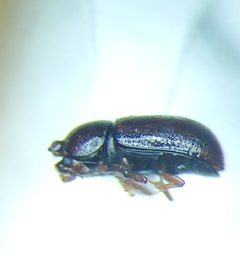
Ceracis is a of minute tree-fungus beetles ( Ciidae) comprising approximately 56 described . The genus is characterized by small body size, reduced antennal segmentation (typically 8-9 antennomeres), and pronounced in cephalic and pronotal armature. Species within the Ceracis furcifer group exhibit specialized feeding on the blood-red bracket fungus Pycnoporus sanguineus, representing a unique dietary specialization among animals. The genus has a predominantly Neotropical distribution, with records extending from South America through the Caribbean to the southern United States.
Pronunciation
How to pronounce Ceracis: /sɛˈræ.sɪs/
These audio files are automatically generated. While they are not always 100% accurate, they are a good starting point.
Identification
Distinguished from other Ciidae by the combination of: reduced antennomere count (8-9, versus 10 in most Ciidae); fine, sparse pronotal and elytral punctation; and presence of pronounced cephalic/pronotal armature in males. Within the genus, groups are defined by male horn : the furcifer group has a frontoclypeal horn; the cornifer group has paired pronotal horns; other species vary in horn number and arrangement. Females are more difficult to identify and often require examination of abdominal terminalia. Similar to Ennearthron and other Ciidae, but separable by antennal segmentation and male secondary sexual characters.
Images
Appearance
Minute beetles, typically 2-4 mm in length. Body elongate-cylindrical, convex dorsally. with 8 or 9 antennomeres (fewer than most Ciidae). Males frequently possess elaborate cephalic and pronotal projections: anterocephalic edge may be produced forward as a lamina or horn; pronotal edge often modified into paired horns, plates, or structures. Pronotum and with fine, sparse punctation, sometimes arranged in subseriate rows. Body coloration variable within , ranging from reddish-brown to dark brown or black. pronounced, with females generally lacking the horns and projections present in males.
Habitat
Associated with fruiting bodies of wood-decaying bracket fungi (Basidiomycota: Polyporaceae), particularly in forested and open . occur in diverse biomes including tropical rainforests, dry forests (Caatinga), wetlands (Pantanal), and urban environments with suitable fungal . The furcifer group is strongly associated with Pycnoporus sanguineus, which grows on dead hardwood in open areas, forest clearings, and urban settings.
Distribution
Essentially Neotropical. Records from Brazil (including Cerrado, Caatinga, Pantanal, and Atlantic Forest biomes), Argentina, French Guiana, Guadeloupe, Suriname, Peru, Colombia, the Lesser Antilles, Caribbean islands, and the southern tip of Florida (USA). distributions are wider than historically recognized, with sympatric occurrence common in the furcifer group.
Diet
Specialized consumers of basidiomes (fruiting bodies) of wood-decaying bracket fungi. The furcifer -group feeds almost exclusively on Pycnoporus sanguineus, being the only animals known to specialize on this fungus. Other species have been associated with Trametes, Coriolus, and Lenzites (Polyporaceae).
Host Associations
- Pycnoporus sanguineus - primary fungusblood-red bracket fungus; exclusive for furcifer -group
- Trametes - fungusPolyporaceae
- Coriolus - fungusPolyporaceae
- Lenzites - fungusPolyporaceae
Behavior
and larvae inhabit fungal fruiting bodies, with breeding confirmed by presence of tenerals or multiple adults in basidiomes. Specialized feeding on fungal tissue. or cryptic habits presumed based on . likely occurs when host fungi are or during periods of fungal fruiting.
Ecological Role
Specialized decomposers of bracket fungal fruiting bodies, particularly Pycnoporus sanguineus. Potential importance in nutrient cycling within Neotropical where this common wood-decay fungus occurs. The furcifer group's exclusive association with P. sanguineus suggests a highly coevolved relationship with potential ecosystem-level significance in fungal decomposition .
Human Relevance
No direct economic importance. Occasional presence in urban and suburban environments where fungi grow on landscape trees or dead wood. Of scientific interest due to unique dietary specialization of the furcifer group.
Similar Taxa
More Details
Taxonomic History
The Ceracis furcifer -group underwent significant revision, with four species names synonymized under C. cornifer and C. semipallidus confirmed as synonym of C. furcifer. Frontoclypeal horn and body coloration show substantial intraspecific variation, historically causing taxonomic confusion.
Male Secondary Sexual Characters
The elaborate horns and projections on the and pronotum of males are highly variable within and likely subject to . These structures are used in species-level identification but require careful interpretation due to intraspecific variation.
Conservation Status
Not formally assessed. Dependence on specific fungal , particularly Pycnoporus sanguineus, may make some vulnerable to alteration affecting fungal substrate availability.
Sources and further reading
- BugGuide
- Wikipedia
- GBIF taxonomy match
- iNaturalist taxon
- NCBI Taxonomy
- Two new species of Ceracis Mellié, 1849 (Coleoptera: Ciidae) from Brazil, with a supplementary description and new distributional records of Ceracis nigropunctatus Lawrence, 1967
- Ceracis luci sp. nov., the first Ciidae species (Coleoptera: Tenebrionoidea) from the Caatinga biome
- Systematics of the Ceracis furcifer Species-Group (Coleoptera: Ciidae): The Specialized Consumers of the Blood-Red Bracket Fungus Pycnoporus sanguineus