
Xantholinus linearis
Blatchley, 1910
Linear Rove Beetle
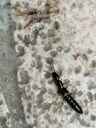
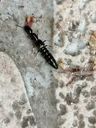
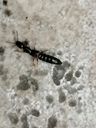
Xantholinus linearis is a rove beetle in the Staphylinidae, characterized by an elongated, slender body form typical of the . The was described by Blatchley in 1910. As a member of the tribe Xantholinini, it belongs to a group of rove beetles often associated with decaying organic matter and soil . The specific epithet 'linearis' refers to the linear, slender body shape.
Pronunciation
How to pronounce Xantholinus linearis: //zænˈθɒlɪnəs laɪˈniːərɪs//
These audio files are automatically generated. While they are not always 100% accurate, they are a good starting point.
Identification
Distinguished from other Xantholinus by its particularly slender, linear body proportions. Separation from similar rove beetles requires examination of genitalic structures and detailed morphological characters. The combination of elongated body form, dark coloration, and association with typical Xantholinus aids in preliminary identification. Definitive identification to species level typically requires microscopic examination and comparison with or authoritative keys.
Images
Habitat
Found in soil and leaf litter , often in association with decaying organic matter. Members of the Xantholinus are frequently encountered in moist, shaded environments including forest floors, compost, and rotting vegetation. Specific microhabitat preferences for X. linearis are not well documented but likely align with general patterns for the genus.
Distribution
Documented distribution includes the Azores archipelago in the North Atlantic Ocean, with records from Corvo, Faial, São Jorge, São Miguel, and Terceira islands. The ' broader distribution beyond the Azores is not clearly established in available sources.
Seasonality
Activity patterns are not well documented. As a soil-dwelling rove beetle, likely active year-round in suitable microhabitats, with potential seasonal peaks in activity during warmer, wetter periods.
Behavior
As with most Xantholinini, likely predatory or scavenging on small and organic debris in soil and litter . Specific behavioral observations for X. linearis have not been documented.
Ecological Role
Contributes to decomposition processes and nutrient cycling in soil and litter . As a member of the soil fauna, likely functions as both and prey within the detrital .
Human Relevance
No documented direct significance to humans. Like many soil-dwelling staphylinids, may occasionally be encountered in garden compost or cultivated soils but is not considered a pest.
Similar Taxa
- Xantholinus longiventrisSimilar elongated body form and dark coloration; distinguished by differences in genitalic structures and subtle proportional differences in body segments.
- Other Xantholinini genera (e.g., Neohypnus)Similar general appearance and preferences; Xantholinus distinguished by specific combinations of antennal structure, pronotal shape, and male genitalic characters.
More Details
Taxonomic Note
There is some confusion in authorship between sources: Catalogue of Life lists Blatchley, 1910, while GBIF lists A.G. Olivier, 1795. This discrepancy likely reflects synonymy or misapplication issues in the literature. The GBIF record indicates 'ACCEPTED' status with match type 'EXACT', while Catalogue of Life lists the name as a 'synonym' under Neohypnus lineatus. The taxonomic relationships within Xantholinini, particularly between Xantholinus and Neohypnus, require further clarification.
Azorean Distribution
The concentration of records from the Azores islands suggests either an or introduced status for this archipelago, or alternatively reflects collecting . The oceanic island distribution pattern is notable given the generally widespread distributions of many Xantholinus .