Philonthus flumineus
Casey, 1915
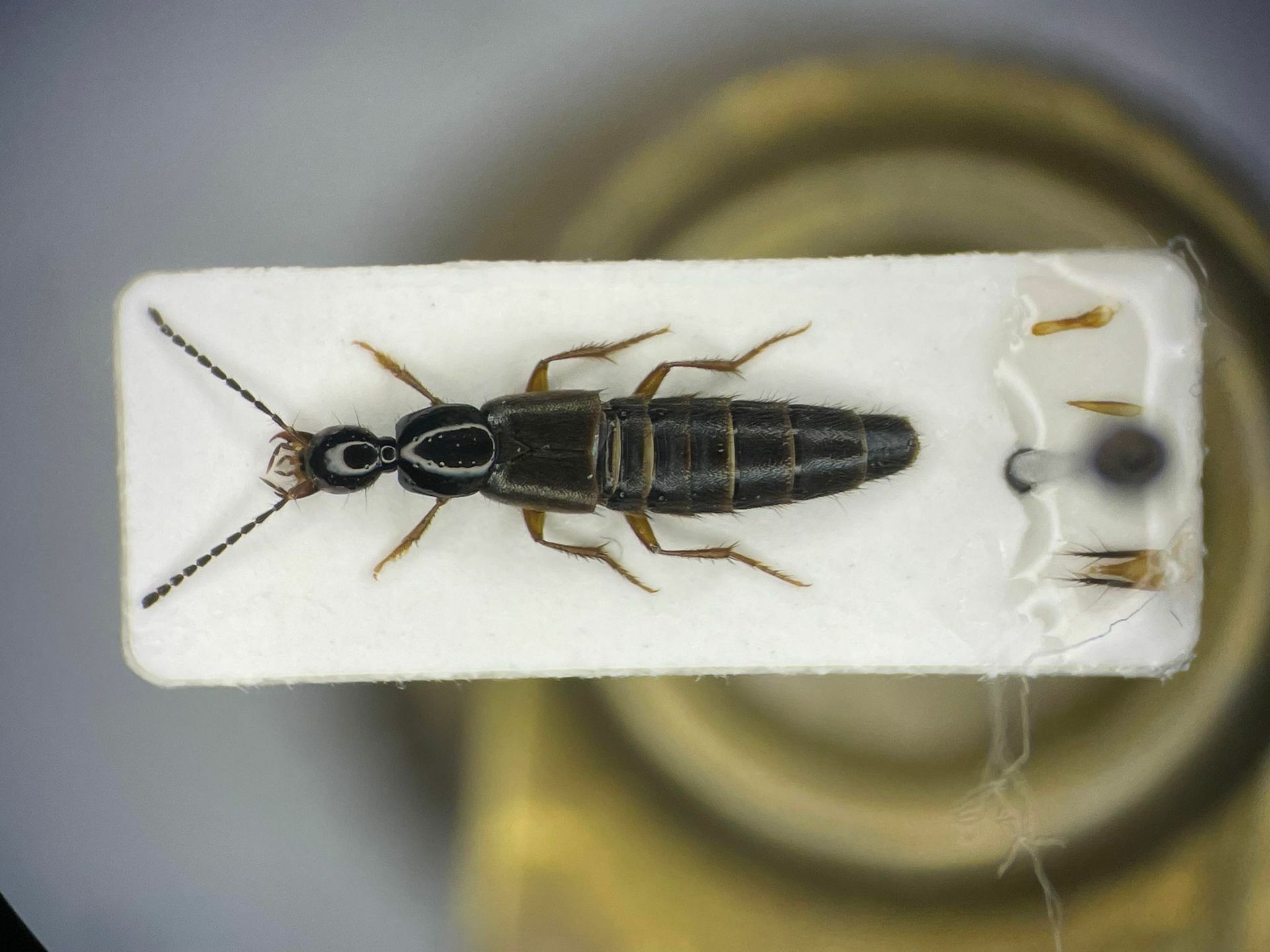
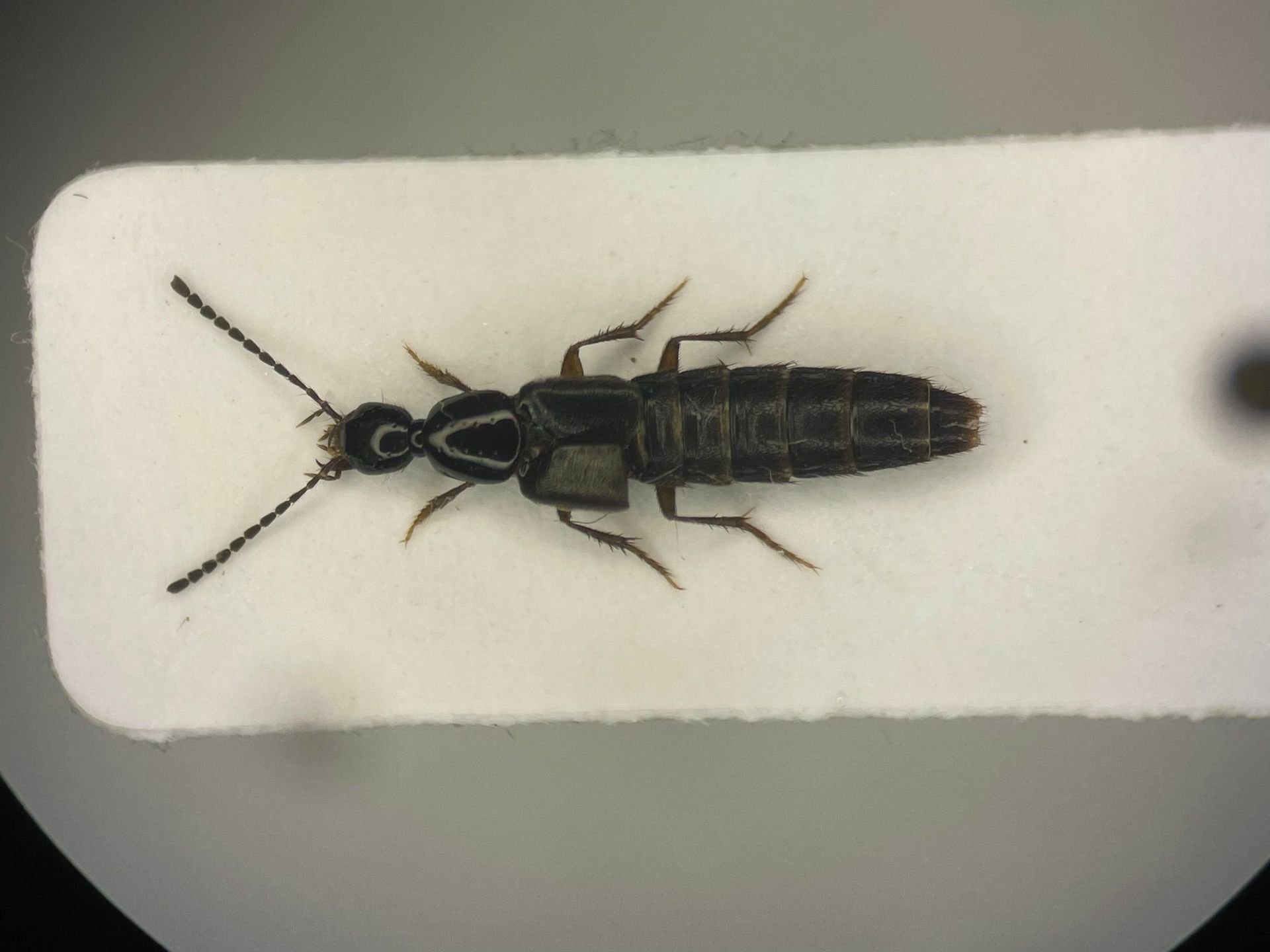
Philonthus flumineus is a rove beetle in the Staphylinidae, described by Casey in 1915. The epithet 'flumineus' (Latin for 'of rivers') suggests an association with riparian or streamside . As a member of the large Philonthus, it shares the characteristic shortened and predatory habits typical of this group. Available distribution records indicate a broad North American range across eastern Canada and much of the United States.
Pronunciation
How to pronounce Philonthus flumineus: /fɪˈlɒnθəs fluˈmɪniəs/
These audio files are automatically generated. While they are not always 100% accurate, they are a good starting point.
Identification
Identification of Philonthus flumineus to level requires examination of microscopic characters including genitalia, as is typical for the Philonthus. The species is distinguished from by subtle morphological features described in the original description by Casey (1915), including specific arrangements of punctation on the pronotum and . Without access to the original description or modern revisions, precise diagnostic characters cannot be stated. Specimens should be compared against vouchered material in institutional collections or identified by in Staphylinidae.
Images
Habitat
The epithet 'flumineus' (of rivers) strongly suggests association with riparian zones, stream margins, or other freshwater-edge . This inference is consistent with patterns observed in other Philonthus species, many of which occupy moist microhabitats. However, specific habitat documentation for P. flumineus has not been located.
Distribution
Recorded from Canada (Manitoba, New Brunswick, Newfoundland, Nova Scotia, Ontario, Quebec) and the United States (Alabama, Arkansas, Connecticut, Georgia, Iowa, Illinois, Indiana, Kansas, Kentucky, Louisiana, Massachusetts, Maryland, Maine, Michigan, Minnesota, Missouri, Mississippi, Montana, North Carolina, New Hampshire, New Jersey, New York, Ohio, Oklahoma, Pennsylvania, Rhode Island, Tennessee, Texas, Virginia, Vermont, Wisconsin, West Virginia).
Ecological Role
As a member of Philonthus, P. flumineus is presumed predatory, functioning as a of small in its . This role is inferred from the well-documented feeding of , which actively hunt in decaying organic matter, leaf litter, and other moist substrates. The likely contributes to nutrient cycling and of prey organisms.
Similar Taxa
- Philonthus caeruleipennisSimilar size range and general body form; both have metallic coloration on . P. caeruleipennis is larger (12-15 mm), has distinctive metallic blue-green elytra contrasting with black body, and is specifically associated with fungi. P. flumineus is smaller and lacks the pronounced blue-green metallic sheen.
- Philonthus politusSimilar size and overall appearance. P. politus has been documented from carrion and may show different preferences. Accurate separation requires examination of male genitalia and detailed punctation patterns.
- Other Philonthus speciesThe Philonthus contains numerous that are morphologically similar and require expert identification. Many share the general habitus of elongated body, short exposing most of the , and dark coloration with variable metallic reflections.
More Details
Taxonomic note
The original description by Casey (1915) has not been widely digitized, limiting accessibility of diagnostic characters. Modern taxonomic revisions of North American Philonthus are needed to clarify boundaries and provide updated identification resources.
Etymology
The specific epithet 'flumineus' derives from Latin 'flumen' meaning river, indicating the type locality or presumed association at the time of description.