
Gabrius splendidulus
(Gravenhorst, 1802)
A predatory rove beetle in the subtribe Philonthina, Gabrius splendidulus occurs primarily in Europe and western Russia, with introduced in North America. The develops in subcortical , specifically within bark beetle galleries. Mature larvae have been re-described using light and scanning electron microscopy, with diagnostic characters established to distinguish them from other Philonthina .
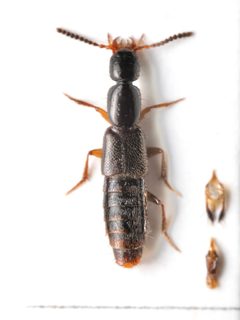
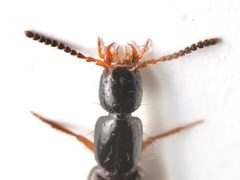
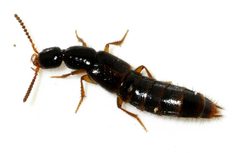
Pronunciation
How to pronounce Gabrius splendidulus: //ˈɡeɪ.bri.əs splɛnˈdɪdjʊləs//
These audio files are automatically generated. While they are not always 100% accurate, they are a good starting point.
Identification
Mature larvae distinguished from other Philonthina by a combination of morphological characters detailed in taxonomic re-descriptions; specific diagnostic traits include external structural features visible under scanning electron microscopy. not described in available sources.
Images
Habitat
Subcortical; specifically associated with bark beetle galleries in wood-boring insect tunnels beneath tree bark.
Distribution
Native to Europe, Russia (European part and western Siberia), Georgia, and Turkey. Introduced to North America: Canada (British Columbia) and USA (Maryland).
Host Associations
- Scolytinae - associationdevelops in bark beetle galleries; predatory on inhabitants
Life Cycle
Larval development occurs in bark beetle galleries; mature larvae described but pupal and details not documented.
Ecological Role
in bark beetle gallery ; likely regulates of scolytine beetles and associated fauna in subcortical microhabitats.
Similar Taxa
- Nudobius lentusalso subcortical in bark beetle galleries with re-described larvae; distinguished by subtribal placement (Xantholinini vs. Philonthina) and larval