
Gabrius appendiculatus
Sharp, 1910
Gabrius appendiculatus is a rove beetle in the Staphylinidae, described by Sharp in 1910. It is native to Europe and Russia, with introduced established in eastern Canada. As a member of the tribe Staphylinini, it belongs to a diverse group of predatory rove beetles commonly found in decaying organic matter.
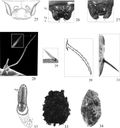
Pronunciation
How to pronounce Gabrius appendiculatus: //ˈɡæb.ri.əs əˌpɛn.dɪˈkjuː.lɑː.təs//
These audio files are automatically generated. While they are not always 100% accurate, they are a good starting point.
Images
Habitat
Decaying organic matter including compost, , and decomposing plant material. Often associated with moist, nutrient-rich substrates.
Distribution
Native to Europe, Russia (European part, western Siberia, Far East), and Iran. Introduced to Canada: British Columbia, New Brunswick, Newfoundland, Ontario, and Quebec.
Ecological Role
in decomposer , likely feeding on small in decaying organic substrates.
Human Relevance
Introduced to Canada, possibly through human-mediated transport of organic materials or horticultural products. No documented economic impact.
More Details
Taxonomic placement
Placed in subtribe Philonthina within tribe Staphylinini, subtribe Staphylininae. The Gabrius contains numerous primarily distributed in the Palearctic region.
Introduction history
First detected in Canada in the mid-20th century; now established in multiple provinces suggesting repeated or sustained introduction events.