
Actiastes foveicollis
(LeConte, J. L., 1878)
Pit-collared Ant-loving Rove Beetle
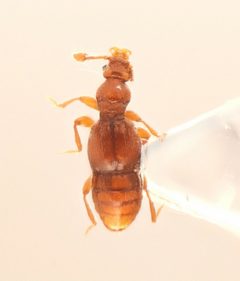
Actiastes foveicollis is a small rove beetle in the Pselaphinae, commonly known as the Pit-collared -loving Rove Beetle. The is distributed across eastern North America and the Pacific Northwest, with records from Canada and the United States. As a member of the Pselaphinae, it is likely associated with ant colonies, though specific ecological details remain poorly documented. The species was described by John Lawrence LeConte in 1878.
Pronunciation
How to pronounce Actiastes foveicollis: /ˈæktɪˌæstiːz foʊˌvaɪˈkoʊlɪs/
These audio files are automatically generated. While they are not always 100% accurate, they are a good starting point.
Identification
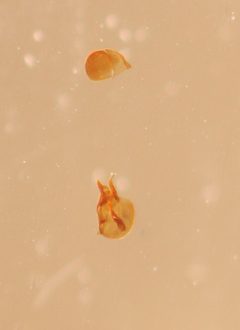
The specific epithet "foveicollis" refers to a foveate (pitted or grooved) pronotum, which likely serves as a diagnostic character distinguishing this from . Members of Actiastes are small-bodied pselaphines with the compact, hump-backed typical of the . Detailed identification requires examination of male genitalia and other microsculptural features of the .
Images
Habitat
Found in forested environments; specific microhabitat preferences are poorly documented but likely include leaf litter, soil, and rotting wood in association with nests.
Distribution
Canada: British Columbia, New Brunswick, Ontario, Quebec. United States: Connecticut, Delaware, Massachusetts, Maryland, Maine, New Hampshire, New Jersey, New York, Pennsylvania, Rhode Island, Tennessee, Virginia, West Virginia.
Behavior
As a member of the Pselaphinae, the is likely myrmecophilous (-associated), though direct behavioral observations have not been documented.
Similar Taxa
- Actiastes speciesOther members of the share small size and compact body form; A. foveicollis is distinguished by the foveate pronotum referenced in its specific epithet.
- Other PselaphinaeThe contains numerous small, morphologically similar ; accurate identification requires reference to original descriptions and keys.