
Actiastes
Casey, 1897
Species Guides
4- Actiastes desertorum
- Actiastes foveicollis(Pit-collared Ant-loving Rove Beetle)
- Actiastes fundatum
- Actiastes globiferum(ant-loving beetle)
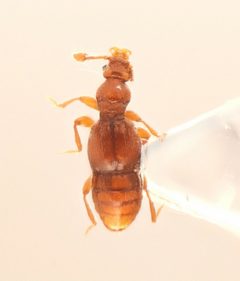
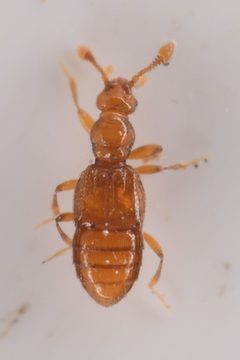
Actiastes is a of ant-loving beetles in the Staphylinidae, established by Casey in 1897. The genus contains nine described distributed across North America. Members belong to the Pselaphinae, a diverse group of small rove beetles often associated with colonies.
Pronunciation
How to pronounce Actiastes: /ækˈtiːæstiːz/
These audio files are automatically generated. While they are not always 100% accurate, they are a good starting point.
Identification
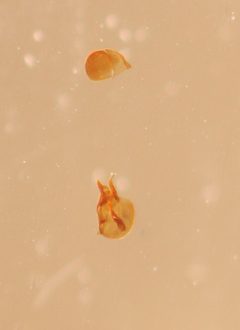
within Actiastes are distinguished by subtle morphological features, particularly in the structure of the and abdominal segments. The can be differentiated from related trimiine genera by characters of the pronotum and male genitalia. Specific identification to species level requires examination of microscopic features.
Images
Habitat
occur in arid and semi-arid regions, including desert environments. The type locality of Actiastes desertorum and related species names suggest association with sandy or loose soil substrates.
Distribution
North America. described by Grigarick & Schuster (1971) are from western North American localities, while those described by LeConte and Park span broader North American ranges.
Host Associations
- Formicidae - myrmecophilousDescribed as 'ant-loving beetles'; specific associations are not documented for most
Behavior
Members are myrmecophilous, living in association with colonies. The nature of this relationship—whether commensal, mutualistic, or parasitic—has not been characterized for most .
Ecological Role
As myrmecophilous beetles, likely function as within nests, potentially feeding on organic debris, ant regurgitations, or other resources within the colony microhabitat.
Similar Taxa
- TrimiinaOther in the subtribe Trimiina share small body size and myrmecophilous habits; Actiastes is distinguished by specific pronotal and genitalic characters
- PselaphinaeDistinguished from other pselaphine subtribes by the trimiine tribal characters including antennal club structure and tarsal formula
More Details
Species diversity
Nine are currently recognized: A. desertorum, A. foveicollis, A. fovicinus, A. fundatum, A. globifer, A. globiferum, A. spatium, A. suteri, and A. wagneri. Several were described by Grigarick & Schuster in 1971 from western North American material.
Taxonomic history
The was established by Casey in 1897. were later added by LeConte (1849, 1878), Park (1963), and Grigarick & Schuster (1971). The epithets globifer and globiferum represent separate species described by LeConte in different publications.