
Trichonyx sulcicollis
(Reichenbach, 1816)
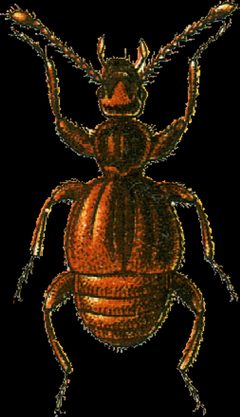
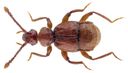
Trichonyx sulcicollis is a small rove beetle ( Staphylinidae, Pselaphinae) originally described from Europe in 1816. It belongs to the tribe Trichonychini within the diverse ant-loving beetle group (Pselaphinae). The has been recorded across much of Europe and has been introduced to the northeastern United States (New Hampshire, New York). As a pselaphine rove beetle, it is likely associated with leaf litter and soil , though specific ecological details remain poorly documented.
Pronunciation
How to pronounce Trichonyx sulcicollis: /trɪˈkoʊ.nɪks ˌsʌl.sɪˈkɒl.ɪs/
These audio files are automatically generated. While they are not always 100% accurate, they are a good starting point.
Identification
A small pselaphine rove beetle. The specific epithet 'sulcicollis' (grooved neck) suggests a distinctive sculptured or grooved pronotum that may aid in identification. As with most pselaphines, the is minute and requires careful examination for proper identification. Distinguishing features from would require reference to specialized taxonomic keys for European Pselaphinae.
Images
Habitat
Leaf litter and soil typical of pselaphine rove beetles. Specific microhabitat preferences are not well documented.
Distribution
Native to Europe: recorded from Austria, Belgium, Bulgaria, Belarus, Croatia, Czech Republic, Germany, France, Great Britain, Georgia, Greece, Hungary, Italy, Lithuania, Netherlands, Norway, Poland, Romania, Slovakia, Slovenia, Sweden, Switzerland, Ukraine, and Yugoslavia (historic). Also recorded from European Russia. Introduced to the United States (New Hampshire, New York).
Similar Taxa
- Other Trichonyx species within the same share similar minute body size and pselaphine , requiring detailed examination of pronotal and elytral for separation.
More Details
Taxonomic history
Originally described as Pselaphus sulcicollis by Reichenbach in 1816, later transferred to the Trichonyx. The genus Trichonyx is part of the tribe Trichonychini within the speciose Pselaphinae.
Collection records
iNaturalist shows only 5 observations, suggesting the is rarely encountered or underreported, consistent with the general pattern of pselaphine beetles being poorly represented in citizen science databases due to their minute size and cryptic habits.