
Euplectus acomanus
Casey, 1908
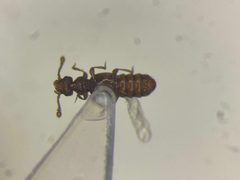
Euplectus acomanus is a minute rove beetle (Staphylinidae: Pselaphinae) described by Casey in 1908. It belongs to the tribe Euplectini, a group of small, often myrmecophilous beetles characterized by compact bodies and reduced . The has been recorded across eastern North America and the southwestern United States, with scattered Canadian occurrences. Like other pselaphines, it likely inhabits moist leaf litter and soil microhabitats.
Pronunciation
How to pronounce Euplectus acomanus: /juːˈplɛktəs əˈkoʊmənəs/
These audio files are automatically generated. While they are not always 100% accurate, they are a good starting point.
Identification
As a member of Euplectus, this likely exhibits the diagnostic features of the : minute size (under 2 mm), short exposing most of the , compact and often hump-backed body form, and clubbed . Definitive identification to species requires examination of male genitalia and comparison with , as Euplectus species are morphologically similar and often separated by subtle characters of the and abdominal sternites.
Images
Habitat
Presumed to inhabit moist forest floor microhabitats, including leaf litter, rotting wood, and soil interstices, based on documented habits of and the Pselaphinae generally. Specific microhabitat preferences for this are undocumented.
Distribution
Eastern and southwestern North America. Documented from Canada (New Brunswick, Quebec) and USA (Arizona, Indiana, Massachusetts, Maryland, Maine, Mississippi, New Mexico, Oklahoma, Pennsylvania). The disjunct distribution pattern suggests possible cryptic diversity or undersampling of intervening regions.
Similar Taxa
- Euplectus karsteniiA Palearctic with which E. acomanus has been historically confused in literature; separation requires genitalic dissection and geographic context.
- Other Euplectus speciesMorphologically similar minute pselaphines requiring detailed examination of male genitalia, abdominal chaetotaxy, and antennal club structure for definitive identification.
More Details
Taxonomic history
Described by Thomas L. Casey in 1908 based on material from the eastern United States. The epithet 'acomus' derives from Acoma, though the specific etymological reference is unclear. The species has received limited modern taxonomic treatment.
Collection status
Extremely rarely collected, with only one observation documented in iNaturalist as of source date. This likely reflects its minute size and cryptic habits rather than actual rarity, as is common for pselaphine beetles.