
Eusphalerum swauki
Hatch, 1957
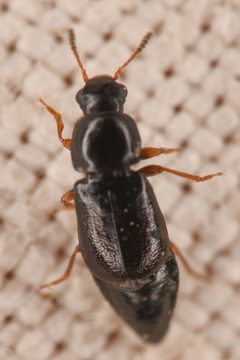
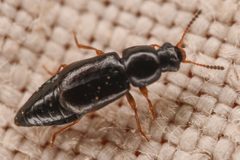
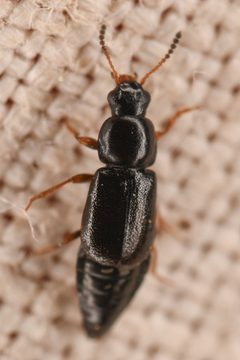
Eusphalerum swauki is a of rove beetle in the Staphylinidae, described by Hatch in 1957. It belongs to the Omaliinae, a group of small to medium-sized beetles often associated with decaying plant matter and fungal . The species has a restricted distribution in western North America, with records from the Pacific Northwest and adjacent regions of Canada and the United States.
Pronunciation
How to pronounce Eusphalerum swauki: /juːsfəˈlɛrəm ˈswaʊki/
These audio files are automatically generated. While they are not always 100% accurate, they are a good starting point.
Identification
Members of Eusphalerum can be distinguished from other Omaliinae by their compact body form, short that expose most of the , and with a weakly defined club. Eusphalerum swauki specifically may be separated from by subtle differences in body proportions, punctation , and male genitalic structures, though detailed examination requires reference to the original description and comparative material.
Images
Distribution
Canada: Alberta, British Columbia; United States: Idaho, Oregon, Washington, Wyoming.
Similar Taxa
- Other Eusphalerum speciesCongeneric share the compact body form and short characteristic of the ; precise identification requires examination of subtle morphological details including punctation patterns and genitalic structures.
- Other Omaliinae generaRelated in the Omaliinae may appear superficially similar, but Eusphalerum is distinguished by its combination of body shape, antennal structure, and tarsal formula.
More Details
Taxonomic Note
The was described by Melville Hatch in 1957, a prolific on the beetles of the Pacific Northwest. The specific epithet 'swauki' may refer to a geographic or personal name, though its etymology is not documented in readily available sources.
Data Scarcity
This is represented by extremely few occurrence records in public databases, with only a single observation in iNaturalist as of the knowledge cutoff. This scarcity reflects either genuine rarity, undercollection, or specificity in remote or poorly sampled regions.