
Ilyobates bennetti
Donisthorpe, 1914
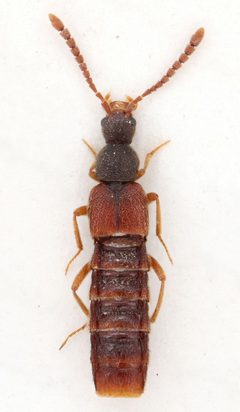
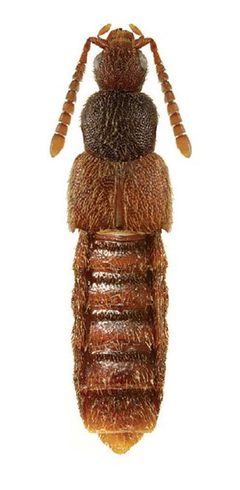
Ilyobates bennetti is a of rove beetle in the Staphylinidae, Aleocharinae, described by Donisthorpe in 1914. It was previously known as Ilyobates subopacus Palm, 1935, which has been synonymized following revision of type material. The species belongs to a of six valid species distributed across the Pontomediterranean region. Like other members of its genus, it exhibits considerable intraspecific morphological variation and has a with occurring in spring and summer.
Pronunciation
How to pronounce Ilyobates bennetti: /ɪˌlioʊˈbeɪtiːz ˈbɛnɪtiː/
These audio files are automatically generated. While they are not always 100% accurate, they are a good starting point.
Identification
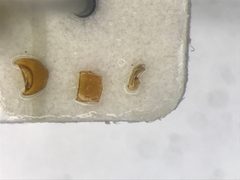
Ilyobates bennetti can be distinguished from through examination of mouthparts, primary and secondary sexual characteristics, and other differential morphological features detailed in the revision. The was previously confused with I. subopacus, now synonymized. Accurate identification requires reference to the diagnostic table and illustrations of genitalia and other key characters provided in taxonomic revisions, given the enormous intraspecific morphological variability that characterizes this genus.
Images
Habitat
beetles overwinter in a cryptic, subterranean whose precise nature remains undescribed. Field investigations and collection data indicate association with ground-level environments suitable for spring and summer reproductive activity.
Distribution
Pontomediterranean faunal element occurring across the Palaearctic region of Europe. Records extend to Russia (northern European part and Siberia), Turkey, and Europe generally. Introduced to Canada (New Brunswick, Newfoundland, Nova Scotia, Ontario, Quebec).
Seasonality
Monovoltine (one per year). occurs in spring and summer. are present throughout the year but are reproductively active during the warmer months.
Life Cycle
with one annually. overwinter in an underground and emerge to reproduce in spring and summer.
Behavior
exhibit a distinctive , retreating to an undescribed subterranean during colder months. This cryptic habit limits surface observations during winter.
Similar Taxa
- Ilyobates nigricollis (Paykull, 1800)Similar Pontomediterranean distribution and morphological variability; distinguished by specific characters of mouthparts and genitalia
- Ilyobates propinquus (Aubé, 1850) with overlapping range; requires detailed morphological examination for separation
- Ilyobates mech (Baudi, 1848)Another valid in the same with similar preferences and
- Ilyobates merkli EppelsheimValid congeneric distinguished by specific diagnostic characters
- Ilyobates mirabilis Assing, 1999Most recently described congeneric ; comparison requires reference to original description
More Details
Taxonomic History
The was originally described as Ilyobates bennetti by Donisthorpe in 1914. Palm's 1935 description of I. subopacus was based on material later determined to be ; the synonymy was confirmed through lectotype designation of I. subopacus in the revision.
Intraspecific Variation
Morphometric analysis has demonstrated enormous intraspecific morphological variability in Ilyobates , including I. bennetti. This variability has historically contributed to taxonomic confusion and the description of subsequently synonymized forms.
Biogeographic Pattern
As a Pontomediterranean faunal element, I. bennetti exemplifies the distribution pattern of organisms with primary range across the Mediterranean Basin and Black Sea regions, with some extension into adjacent areas.
Sources and further reading
- BugGuide
- GBIF taxonomy match
- iNaturalist taxon
- NCBI Taxonomy
- Catalogue of Life
- Publications | Entomology Research Museum
- AC or DC? 2 newly described electric fish from the Amazon are wired differently | Blog
- Uncategorized | Blog - Part 33
- A revision of Ilyobates Kraatz, 1856 (Coleoptera: Staphylinidae, Aleocharinae, Oxypodini).