
Dinocoryna
Casey, 1893
Species Guides
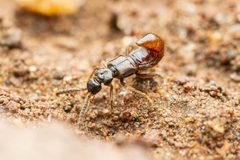
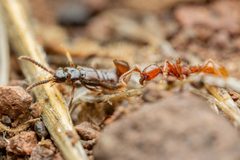
1Dinocoryna is a of rove beetles ( Staphylinidae) in the tribe Lomechusini, Aleocharinae. The genus was established by Casey in 1893 and contains at least six described distributed in North America. Members of this genus are myrmecophilous, meaning they are associated with colonies.
Pronunciation
How to pronounce Dinocoryna: //ˌdaɪnoʊˈkɔrɪnə//
These audio files are automatically generated. While they are not always 100% accurate, they are a good starting point.
Identification
Dinocoryna can be distinguished from other Lomechusini by features of the male genitalia and tarsal structure, though specific diagnostic characters require examination of . The genus name refers to the 'terrible' or 'formidable' (Greek: deinos) nature of these beetles, possibly alluding to their robust form or -associated habits.
Images
Distribution
North America, with records from the eastern United States (North Carolina, South Carolina), the southwestern United States (Arizona), and Central America ( Rica).
Host Associations
- Ants - myrmecophilyMembers of tribe Lomechusini are known to be socially parasitic or commensal within colonies, though specific records for Dinocoryna are limited.
Similar Taxa
- Other Lomechusini generaSimilar myrmecophilous habits and Aleocharinae ; Dinocoryna is distinguished by specific structural features including tarsal and genitalic characters.
More Details
Taxonomic history
The was described by Casey in 1893 with Dinocoryna bisinuata as the type . Most species were described by Seevers in 1959 and 1965. The species D. schmitti was originally described in the genus Myrmecophila by Wasmann in 1897 before being transferred to Dinocoryna.
Species list
The six described are: Dinocoryna akrei Seevers, 1965 ( Rica), D. arizonensis Seevers, 1959 (Arizona), D. bisinuata Casey, 1893 (type species, eastern North America), D. carolinensis Seevers, 1959 (North Carolina), D. schmitti (Wasmann, 1897) (Central America), and D. tibialis Seevers, 1959 (South Carolina).