
Cordalia
Jacobs, 1925
Species Guides
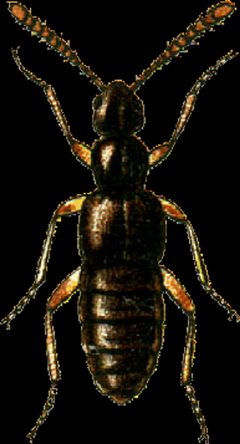
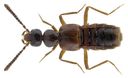
1Cordalia is a of aleocharine rove beetles in the tribe Falagriini, established by Jacobs in 1925. The genus contains at least three described : Cordalia obscura (the type species, originally described in 1802), C. permutata from 2002, and C. taiwanensis from 2008. As members of the hyper-diverse rove beetle Staphylinidae, species in this genus are small to minute beetles with the characteristic abbreviated that leave most of the exposed.
Pronunciation
How to pronounce Cordalia: /kɔrˈdaː.li.a/
These audio files are automatically generated. While they are not always 100% accurate, they are a good starting point.
Identification
Cordalia can be distinguished from other Falagriini by genitalic and other subtle morphological features, though specific diagnostic characters require examination. The type species C. obscura is a widespread Palearctic species that has been introduced to North America. Accurate identification to species level generally requires dissection and comparison with type material or authoritative keys.
Images
Distribution
The has a disjunct distribution: Cordalia obscura occurs across Europe and has been introduced to North America; C. permutata is known from the Palearctic region; and C. taiwanensis is to Taiwan.
Similar Taxa
- Other Falagriini generaCordalia shares the tribe Falagriini with numerous other small aleocharine ; differentiation requires examination of mouthpart structure, genitalia, and other fine morphological details.
More Details
Taxonomic history
The was established by Jacobs in 1925 for Cordalia obscura, which had previously been described under other genera. The genus was long considered until the descriptions of C. permutata (Assing, 2002) and C. taiwanensis (Pace, 2008).
Nomenclatural note
The Wikipedia summary incorrectly describes Cordalia as ''; this is outdated information predating the description of the two additional .