
Anisotoma confusa
(Horn, 1880)
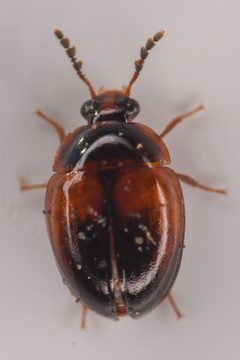
Anisotoma confusa is a of round fungus beetle in the Leiodidae, first described by George Henry Horn in 1880. The species occurs in western North America from Alaska to California. As a member of the tribe Anisotomini, it belongs to a group of small beetles primarily associated with fungal . The specific epithet "confusa" suggests historical taxonomic confusion with related species.
Pronunciation
How to pronounce Anisotoma confusa: //ˌænɪˈsoʊtoʊmə kənˈfjuːsə//
These audio files are automatically generated. While they are not always 100% accurate, they are a good starting point.
Identification
Distinguished from by genitalic characters and subtle differences in elytral punctation and body proportions. Examination of male genitalia is typically required for definitive identification within the Anisotoma.
Images
Habitat
Associated with fungal fruiting bodies and decaying organic matter in forested environments.
Distribution
Western North America: Canada (Alberta, British Columbia); United States (Alaska, California, Oregon, Nevada, Washington).
Ecological Role
Member of the saprotrophic in forest ; contributes to nutrient cycling through association with fungi and decaying organic matter.
Similar Taxa
- Anisotoma speciesCongeneric require detailed examination of male genitalia and subtle morphological characters for separation; the specific epithet "confusa" reflects this historical difficulty.
Sources and further reading
- BugGuide
- GBIF taxonomy match
- iNaturalist taxon
- Catalogue of Life
- UC Davis-Based Projects: To Bee or Not to Bee? | Bug Squad
- Diversity of Bugs at Bohart Museum of Entomology | Bug Squad
- ZooKeys with 5 of the Top 10 Marine Species | Blog
- Interview: description of two African shovel-snout snakes from Angola
- Year of the Snake: a serpent selection to celebrate Lunar New Year!