
Ptomaphagus
Hellwig, 1795
Species Guides
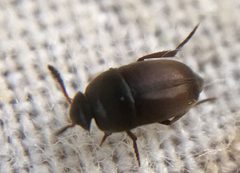
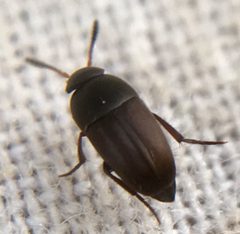
8Ptomaphagus is a of small carrion beetles in the Leiodidae, containing at least 50 described . Many species are obligately cavernicolous (troglobitic), restricted to cave systems in North America and Eurasia. The genus has been extensively studied as a model system for understanding cave , speciation, and evolutionary . Some species show advanced reproductive isolation, with hybridization experiments demonstrating reduced and viability between distinct .
Pronunciation
How to pronounce Ptomaphagus: /toʊˈmæfəɡəs/
These audio files are automatically generated. While they are not always 100% accurate, they are a good starting point.
Images
Habitat
Caves; many are obligately cavernicolous (troglobitic) and restricted to subterranean environments. Non-cavernicolous species occupy surface .
Distribution
North America (particularly southeastern United States including Alabama and Kentucky cave systems) and Eurasia (including European Russia, Denmark, Norway). At least 18 troglobitic occur in the southeastern United States.
Life Cycle
with , larval, and stages. Experimental studies document F1 and F2 hybrid between , with reduced viability and longevity in hybrid offspring between morphologically distinct populations.
More Details
Taxonomic Authorship
Ptomaphagus is attributed to Hellwig, 1795, though some sources incorrectly cite Illiger, 1798 (Bouchard et al., 2011).
Speciation Mechanism
A model of speciation involving cave isolation during interglacial periods and potential overland during glacial periods has been proposed for southeastern United States . 'Vicariance by erosion' has been suggested as a mechanism of species diversification in North American cave beetles.
Species Diversity
The includes Ptomaphagus hirtus, a model for genetics and evolutionary studies of cave . New species continue to be described, including P. chromolithus and P. torodei.
Sources and further reading
- BugGuide
- Wikipedia
- GBIF taxonomy match
- iNaturalist taxon
- NCBI Taxonomy
- Catalogue of Life
- Population Genetics and Evolutionary Biology of the Cave Beetle Ptomaphagus hirtus
- EXPERIMENTAL HYBRIDIZATIONS BETWEEN POPULATIONS OF CAVERNICOLOUSPTOMAPHAGUSBEETLES (COLEOPTERA: LEIODIDAE: CHOLEVINAE)
- The life cycle of a Kentucky cave beetle, Ptomaphagus hirtus, (Coleoptera; Leiodidae; Catopinae)
- Figure 1 from: Leray VL, Caravas J, Friedrich M, Zigler KS (2019) Mitochondrial sequence data indicate “Vicariance by Erosion” as a mechanism of species diversification in North American Ptomaphagus (Coleoptera, Leiodidae, Cholevinae) cave beetles. Subterranean Biology 29: 35-57. https://doi.org/10.3897/subtbiol.29.31377
- Record of <i>Ptomaphagus sericatus </i>(Coleoptera: Leiodidae) in Perm and data on the distribution of representatives of this genus in the east of European Russia
- The distribution and evolution of cavernicolous Ptomaphagus beetles in the southeastern United States (Coleoptera; Leiodidae; Cholevinae) with new species and records