
Lyrosoma
Mannerheim, 1853
Species Guides
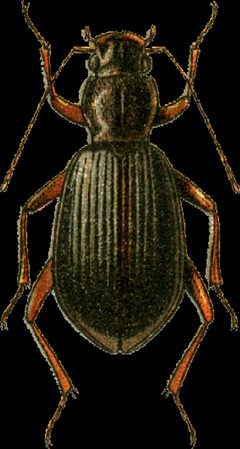
1Lyrosoma is a of primitive carrion beetles in the Agyrtidae, comprising at least three described . Members are small beetles associated with coastal marine environments across the northern Pacific Rim, from Korea and Japan through Russia to Alaska and the Aleutian Islands. The genus represents one of the few carrion beetle lineages specialized for coastal necromass-based .
Pronunciation
How to pronounce Lyrosoma: /laɪˈroʊsəmə/
These audio files are automatically generated. While they are not always 100% accurate, they are a good starting point.
Identification
Distinguished from other Agyrtidae by combination of small body size (approximately 4-5 mm), coastal association, and specific morphological characters including presence or absence of epistomal and elytral reticulation patterns. Lyrosoma pallidum and L. opacum are separable by body size differences and elytral surface . Both occur sympatrically on Kamchatka and several Kurile Islands.
Images
Habitat
Strictly coastal: found under stones, in rock crevices above high tide, on sandy beaches, and among seaweed wrack along seashores. Also recorded from nests of maritime birds including peregrine falcon nests with prey carcasses. include rocky shores, back beaches, beach caves, and seawalls.
Distribution
Northern Pacific coastal regions. L. pallidum: Korea (Gangwon Province), Japan (Hokkaido, Honshu), Russia (Kamchatka Peninsula, Kurile Islands, Sakhalin, Magadan). L. opacum: Russia (Kurile Islands from Urup northward, Kamchatka, Commander Islands), United States (Aleutian Islands, Pribilof Islands, Kodiak Island, Afognak Island, Chirikof Island).
Host Associations
- crested auklet carcass - carcass associationcollection record
- Peregrine falcon nest - nest substrate with prey carcassescollection record
- bird carcass - carcass associationgeneral collection record
- fish carcass - carcass associationcollection record
- decaying seaweeds/starfish - substrate associationcollection record from kelp wrack
Life Cycle
stages and detailed developmental unknown.
Behavior
Active in intertidal and supratidal zones. Collected via pitfall trapping and hand collection from under rocks, kelp wrack, and in cracks of back beach rocks. Occurs in beach caves and above beach zones.
Ecological Role
Associated with carrion and decaying marine organic matter in coastal . Part of shift from plant-based to necromass-based energy flow on volcanic islands.
Similar Taxa
- other AgyrtidaeLyrosoma are distinguished by strict coastal marine specialization; most other Agyrtidae occur in terrestrial forest or cave environments.
More Details
Sympatry
L. pallidum and L. opacum are sympatric on Kamchatka Peninsula and several Kurile Islands (Ketoi, Cirpoi, Yanchika), representing the only documented localities where both co-occur.
Sources and further reading
- BugGuide
- Wikipedia
- iNaturalist taxon
- NCBI Taxonomy
- Catalogue of Life
- A redescripton of Lyrosoma pallidum (Eschscholtz) and distributional range extension of Lyrosoma Mannerheim (Coleoptera, Agyrtidae)
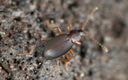
- Figure 11 from: Sikes D, Yoo I (2013) A redescripton of Lyrosoma pallidum (Eschscholtz) and distributional range extension of Lyrosoma Mannerheim (Coleoptera, Agyrtidae). ZooKeys 329: 23-32. https://doi.org/10.3897/zookeys.329.4957
- Figure 1 from: Sikes D, Yoo I (2013) A redescripton of Lyrosoma pallidum (Eschscholtz) and distributional range extension of Lyrosoma Mannerheim (Coleoptera, Agyrtidae). ZooKeys 329: 23-32. https://doi.org/10.3897/zookeys.329.4957
- Figures 7–10 from: Sikes D, Yoo I (2013) A redescripton of Lyrosoma pallidum (Eschscholtz) and distributional range extension of Lyrosoma Mannerheim (Coleoptera, Agyrtidae). ZooKeys 329: 23-32. https://doi.org/10.3897/zookeys.329.4957
- Figures 2–6 from: Sikes D, Yoo I (2013) A redescripton of Lyrosoma pallidum (Eschscholtz) and distributional range extension of Lyrosoma Mannerheim (Coleoptera, Agyrtidae). ZooKeys 329: 23-32. https://doi.org/10.3897/zookeys.329.4957