
Eucinetus
Germar, 1818
plate-thigh beetles
Species Guides
3- Eucinetus haemorrhoidalis(Blood-tipped Eucinetus)
- Eucinetus morio(plate-thigh beetle)
- Eucinetus strigosus(plate-thigh beetle)
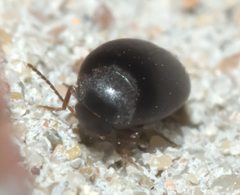
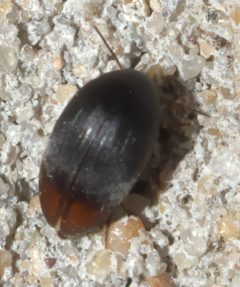
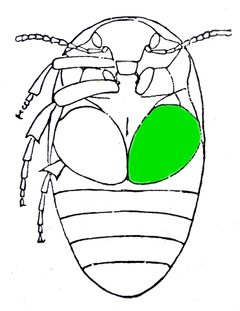
Eucinetus is a of plate-thigh beetles in the Eucinetidae, first described by Germar in 1818. The genus contains at least four extant , with numerous additional species described in 2019 from both modern and fossil contexts. Notably, Eucinetus has been identified from mid-Cretaceous amber (~100 million years old), representing a striking case of long-term evolutionary stasis. The genus exhibits morphological conservatism while maintaining a specialized subcortical lifestyle.
Pronunciation
How to pronounce Eucinetus: /juˈsaɪnətəs/
These audio files are automatically generated. While they are not always 100% accurate, they are a good starting point.
Images
Habitat
Subcortical environments—living under bark in stable, cryptic microhabitats. This specialized association has been maintained for over 100 million years, as evidenced by Cretaceous amber fossils showing the same .
Distribution
Extant recorded from Denmark (DK), Norway (NO), and Sweden (SE). Fossil species known from mid-Cretaceous Kachin amber of northern Myanmar. The demonstrates remarkable geographic persistence across deep time.
Behavior
Exhibits long-term evolutionary stasis with morphological conservatism spanning approximately 100 million years. Maintains consistent subcortical lifestyle across geological time , suggesting strong fidelity.