
Oniticellini
Kolbe, 1905
Genus Guides
2Oniticellini is a tribe of scarab beetles within the Scarabaeinae, commonly known as true dung beetles. The tribe comprises one of the largest and most ecologically significant groups of dung beetles globally, accounting for approximately half of the world's dung beetle fauna. in this tribe exhibit diverse nesting , with most acting as tunnelers that bury below droppings, while some such as Oniticellus and Tragiscus function as dwellers that create cavities within or beneath dung. Oniticellini and the related tribe Onthophagini share a single common ancestor and have achieved worldwide distribution except for Antarctica.
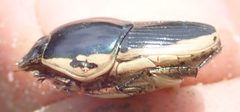
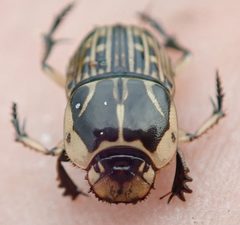
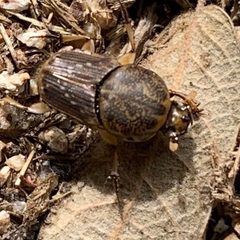
Pronunciation
How to pronounce Oniticellini: /ˌɒnɪtɪˈsɛlɪnaɪ/
These audio files are automatically generated. While they are not always 100% accurate, they are a good starting point.
Identification
Oniticellini can be distinguished from other dung beetle tribes by their morphological characteristics and nesting . Unlike the related Onthophagini, Oniticellini do not include that roll balls. The tribe contains both tunnelers, which excavate burrows beneath dung deposits, and dwellers, which construct chambers within or just under dung. Subtribal divisions (Drepanocerina, Helictopleurina, and Oniticellina) have been proposed based on morphological evidence, though these arrangements remain under taxonomic review. Species-level identification requires examination of genitalia and other detailed morphological features.
Images
Habitat
Oniticellini are found in diverse terrestrial worldwide, excluding Antarctica. They are particularly associated with environments where large herbivorous mammals occur, as these provide the resources required for feeding and . Habitats range from tropical and subtropical grasslands to temperate zones, including disturbed such as livestock grazing areas where some species have been documented to persist.
Distribution
Worldwide distribution except Antarctica. The tribe has achieved global presence through diversification from a single common ancestor, with documented across multiple continents including Africa, Asia, the Americas, Europe, and Australia.
Diet
Nearly all feed on , primarily from large herbivorous mammals. Some species have been observed to specialize on alternative food sources including fungi, carrion, and dead millipedes. Certain species maintain close associations with and ants, potentially feeding on nest debris.
Life Cycle
and larvae utilize as food. Tunneling bury dung at the ends of tunnels excavated below droppings. Dweller species (including Oniticellus and Tragiscus) construct cavities within or immediately beneath dung deposits. The developmental stages progress from to larva to pupa within these protected chambers.
Behavior
Most are tunnelers that excavate burrows beneath deposits and transport dung to the burrow ends for food and provisioning. Some species are dwellers that create brood cavities within or just under dung without extensive tunneling. Certain species have evolved associations with social insects, living in close proximity to and ants.
Ecological Role
Oniticellini provide critical services through processing. Their activities recycle nutrients, reduce of dung-breeding and flies, and can facilitate seed germination through burial. The tribe represents a major component of dung beetle in many ecosystems and contributes substantially to decomposition processes in terrestrial environments.
Human Relevance
Oniticellini contribute to agricultural and pastoral systems by accelerating decomposition, reducing pest fly , and improving soil nutrient cycling. Their presence in livestock grazing areas, including disturbed , indicates adaptability to anthropogenic landscapes. The tribe's ecological services support sustainable land management practices.
Similar Taxa
- OnthophaginiShares a single common ancestor with Oniticellini and together comprises about half of global dung beetle fauna. Distinguished by the presence of ball-rolling in Onthophagini, which are absent from Oniticellini.
- CopriniAnother tribe of true dung beetles (Scarabaeinae) with similar ecological roles. Distinguished by different morphological characteristics and nesting ; Coprini includes some of the most well-known ball-rolling dung beetles.
More Details
Phylogenetic significance
Research by T. Keith Philips (2016) established that Oniticellini and Onthophagini evolved from a single common ancestor, providing a foundational hypothesis for understanding the diversification of these major dung beetle lineages. This phylogenetic framework is subject to ongoing testing and refinement.
Taxonomic subdivision
The tribe has been provisionally divided into three subtribes: Drepanocerina, Helictopleurina, and Oniticellina. However, this arrangement remains under active taxonomic review and may be subject to revision.
Undescribed diversity
Despite being relatively well-studied, Oniticellini may harbor approximately 1,000 undescribed species awaiting scientific documentation, indicating substantial remaining taxonomic work.