
Rutela
Latreille, 1802
Species Guides
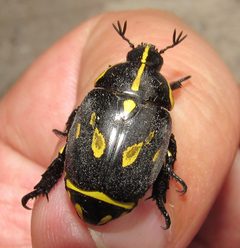
1- Rutela formosa(handsome flower scarab)
Rutela is a of scarab beetles (Scarabaeidae: Rutelinae) established by Latreille in 1802. in this genus are Neotropical in distribution, with Rutela lineola being the most widely distributed species in South America. At least one species, Rutela versicolor, has been documented from seasonally dry tropical forests. The genus contains phytophagous species that have been noted as potentially relevant to agriculture and horticulture.
Pronunciation
How to pronounce Rutela: /ruːˈtɛlə/
These audio files are automatically generated. While they are not always 100% accurate, they are a good starting point.
Images
Habitat
Seasonally dry tropical forests have been documented as for at least one (Rutela versicolor in northern Peru).
Distribution
Neotropical region. Rutela lineola is the most widely distributed in South America, with confirmed records from the South Region of Brazil. Rutela versicolor has been confirmed in Peru.
Seasonality
activity has been documented in the South Region of Brazil; specific seasonal patterns require further study.
Diet
Phytophagous (plant-feeding).
Host Associations
- Coccoloba ruiziana - associated plantSecond recorded plant association for Rutela versicolor; documented from seasonally dry tropical forests in northern Peru.
Ecological Role
Potential agricultural and horticultural pest; phytophagous feeding habits suggest herbivory on vegetation.
Human Relevance
Information on distribution and seasonality has been noted as useful for horticulture and agriculture, implying potential economic relevance as a crop pest.
More Details
Taxonomic Note
Rutela lineola was originally described by Linnaeus in 1767 (not 1758 as sometimes cited). The is classified in the tribe Rutelini within the Rutelinae.
Research Gaps
Detailed knowledge regarding distribution, seasonality, , and specific plant relationships remains limited for most in this .
Sources and further reading
- BugGuide
- Wikipedia
- GBIF taxonomy match
- iNaturalist taxon
- NCBI Taxonomy
- Catalogue of Life
- Confirmación de la presencia de Rutela versicolor Latreille, 1833 (Coleoptera: Scarabaeidae: Rutelinae) en Perú
- Distribution and seasonality of <i>Rutela lineola</i> (Linnaeus, 1758) (Coleoptera: Melolonthidae) in the South Region of Brazil