
Serica elusa
Dawson, 1919
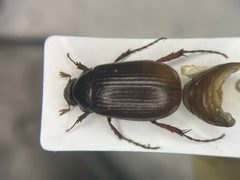
Serica elusa is a small scarab beetle in the Scarabaeidae, first described by Dawson in 1919. measure approximately 10 mm in length and are characterized by their chestnut-brown coloration with a polished, shining upper surface lacking any sericeous or luster. The is restricted to the northeastern Nearctic region, occurring in parts of Canada and the northeastern United States.
Pronunciation
How to pronounce Serica elusa: /ˈsɛrɪkə ɛˈluːsə/
These audio files are automatically generated. While they are not always 100% accurate, they are a good starting point.
Identification
Distinguished from other Serica by the combination of small size (~10 mm), chestnut-brown coloration, and the complete absence of sericeous or luster on the polished upper surface. The bare, shining surface contrasts with species that possess dull or hairy cuticular textures.
Images
Distribution
Nearctic region: Canada (Ontario, Quebec) and United States (New Hampshire, New York).
Similar Taxa
- Other Serica speciesMany share similar size and general body form; S. elusa is distinguished by its polished, non- upper surface and specific northeastern distribution.
Sources and further reading
- BugGuide
- Wikipedia
- GBIF taxonomy match
- iNaturalist taxon
- Bohart Museum Features UC Davis Forensic Entomologist Bob Kimsey | Bug Squad
- Learning About the Importance of Blow Flies Through Maggot Art | Bug Squad
- Bug Eric: Bridge Orbweaver (Gray Cross Spider)
- How Blow Flies Compete (or Not) for Decomposition Duties
- They eat dead things, Part II - Blow flies, Calliphoridae — Bug of the Week
- Carp diem: Fish and blow flies, Calliphoridae — Bug of the Week