
Phobetus
LeConte, 1856
May beetles, junebugs
Species Guides
5- Phobetus comatus(Robinson's rain scarab)
- Phobetus humeralis
- Phobetus mojavus
- Phobetus palpalis
- Phobetus saylori
Phobetus is a of scarab beetles in the Scarabaeidae, Melolonthinae, commonly known as May beetles or junebugs. The genus was established by LeConte in 1856 and contains approximately 11 described . Species in this genus are distributed in arid and semi-arid regions of western North America, with several species to specific desert mountain ranges. The genus is classified in the tribe Phobetusini, which is endemic to the Nearctic region.
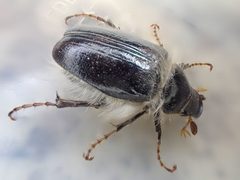
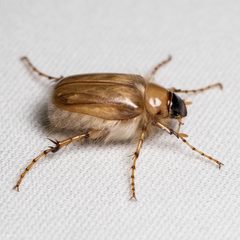
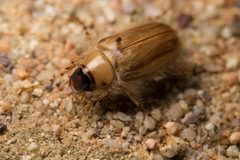
Pronunciation
How to pronounce Phobetus: /foʊˈbiːtəs/
These audio files are automatically generated. While they are not always 100% accurate, they are a good starting point.
Images
Habitat
of Phobetus are associated with arid and semi-arid environments, including desert scrublands and desert mountain ranges. Several species show narrow geographic restriction to specific mountain systems, such as the Panamint Mountains (P. panamintensis) and Mojave Desert regions (P. mojavus, P. desertus).
Distribution
Nearctic region, primarily western North America. Documented from the southwestern United States including California, Nevada, Arizona, and adjacent regions. Distribution records indicate presence in both Nearctic and Neotropical biogeographic realms, though primary occurrence is Nearctic.
More Details
Etymology and Taxonomic History
The name Phobetus was established by John Lawrence LeConte in 1856. The type is Phobetus comatus LeConte, 1856, commonly known as Robinson's rain scarab. The genus was later placed in its own tribe, Phobetusini, reflecting its distinct morphological characteristics within the Melolonthinae.
Species Diversity
The contains 11 described : P. chearyi, P. ciliatus, P. comatus, P. desertus, P. humeralis, P. mojavus, P. palpalis, P. panamintensis, P. saylori, P. sleeperi, and P. testaceus. Several species were described by entomologists Arthur M. Hardy (1973, 1978), Charles A. Cazier (1937), and Lawrence S. Saylor (1936) during the mid-20th century, indicating a period of focused taxonomic study on this group.
Conservation Status
No -level conservation assessments are widely documented for Phobetus. However, the narrow of several species to specific desert mountain ranges may render them vulnerable to alteration from climate change and land use changes in arid western North America.