
Euetheola
Bates, 1888
Species Guides
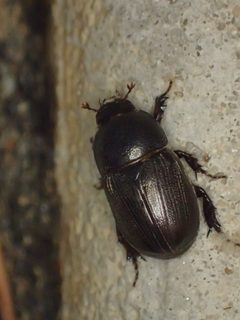
2- Euetheola rugiceps(Sugarcane Beetle)
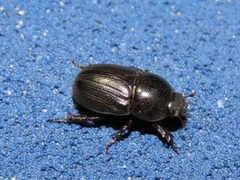
- Euetheola subglabra
Euetheola is a of rhinoceros beetles (Dynastinae) established by Bates in 1888. The genus contains seven described distributed in the Neotropical region. One species, Euetheola humilis, is commonly known as the sugarcane beetle and is recognized as an agricultural pest.

Pronunciation
How to pronounce Euetheola: //juːˌɛθiˈoʊlə//
These audio files are automatically generated. While they are not always 100% accurate, they are a good starting point.
Identification
Members of this are small to medium-sized dynastine scarabs. within Euetheola can be distinguished from related genera in the tribe Pentodontini by specific combinations of mandibular and pronotal characteristics, though precise diagnostic features require examination of and original descriptions.
Images
Distribution
Neotropical region, including Central and South America. Specific distribution varies by ; Euetheola humilis occurs in the southern United States and extends through the Caribbean and Central America.
Host Associations
- Saccharum officinarum - pestEuetheola humilis feeds on sugarcane roots, causing significant damage to crops
Human Relevance
Euetheola humilis, the sugarcane beetle, is an agricultural pest of economic importance. The larvae feed on roots of sugarcane and other grasses, reducing yields and occasionally killing plants. Management strategies have been developed specifically for this in affected regions.
Similar Taxa
- LigyrusBoth belong to the tribe Pentodontini and share general body form; Euetheola are generally smaller and differ in male genitalia structure
- TomarusOverlapping distribution and similar size; Euetheola can be distinguished by distinct clypeal and pronotal
More Details
Taxonomic history
The was established by Henry Walter Bates in 1888. Several were originally described in other genera (Euetheola bidentata and E. humilis in Tomarus, E. subglabra in Ligyrus) and later transferred to Euetheola. Recent revisions by Prokofiev (2012, 2014) added three new species from eastern Asia and South America, expanding the genus beyond its originally conceived Neotropical range.
Species diversity
The seven described show notable geographic disjunction: E. bidentata, E. humilis, E. latipennis, and E. subglabra occur in the Americas; E. hippocrepis and E. sibericana are known from Russia and adjacent regions; and E. paraguayensis occurs in Paraguay. This distribution pattern suggests potential cryptic diversity or complex historical not fully resolved.