
Gymnetis thula
Ratcliffe, 2018
Harlequin Flower Beetle
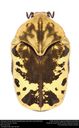
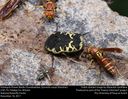
Gymnetis thula, commonly known as the harlequin flower , is a scarab beetle in the Scarabaeidae, Cetoniinae. The was described by Ratcliffe in 2018 and is found in the southern United States and northeastern Mexico. It is a relatively recently described member of the Gymnetis , which includes other colorful flower beetles.
Pronunciation
How to pronounce Gymnetis thula: /ˈɡɪmnɛtɪs ˈθuːlə/
These audio files are automatically generated. While they are not always 100% accurate, they are a good starting point.
Identification
Gymnetis thula can be distinguished from other Gymnetis by its distinctive harlequin color pattern. As a member of the Cetoniinae , it shares the general body plan of flower chafers: an oval, convex body with clubbed . Specific diagnostic features separating it from such as G. caseyi or G. lanius require examination of elytral coloration patterns and body proportions.
Images
Distribution
Recorded from the southern United States (Florida, Louisiana, Texas) and northeastern Mexico (Nuevo León, Tamaulipas). The occupies Nearctic and Neotropical regions.
Similar Taxa
- Gymnetis caseyiSimilar size and coloration; both occur in overlapping geographic ranges in the southern United States and Mexico. Distinguishable by specific elytral pattern details.
- Gymnetis laniusCongeneric with comparable body form and color patterns in the Gymnetis . Differentiation requires close examination of morphological details.
More Details
Taxonomic history
Gymnetis thula was described by Brett C. Ratcliffe in 2018, making it one of the more recently described in the . The specific epithet 'thula' is derived from the Zulu word for 'be quiet' or 'hush', though the reason for this naming choice was not specified in the original description.
Observation data
As of the data source, iNaturalist records over 1,300 observations of this , indicating it is moderately well-documented by citizen scientists within its range.