
Pleurophorus caesus
(Panzer, 1796)
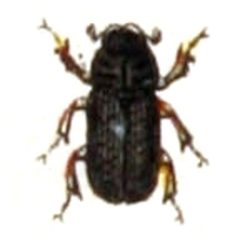
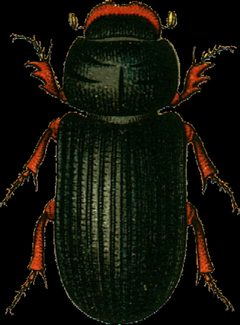
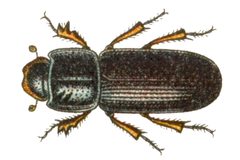
Pleurophorus caesus is a small aphodiine dung beetle in the Scarabaeidae. It has been recorded across a remarkably broad geographic range spanning the Palearctic, Nearctic, Neotropical, Afrotropical, and Madagascan regions. The belongs to the tribe Psammodiini, which are often associated with sandy or loose substrates. Its widespread distribution suggests either human-mediated or an underappreciated native range, though this remains unresolved.
Pronunciation
How to pronounce Pleurophorus caesus: //ˌplʊə.roʊˈfɔː.rəs ˈsiː.səs//
These audio files are automatically generated. While they are not always 100% accurate, they are a good starting point.
Images
Habitat
Has been recorded from sandy substrates and -associated , consistent with other members of the tribe Psammodiini. Specific microhabitat preferences are not well documented.
Distribution
Native or established across multiple biogeographic regions: Palearctic (Europe, North Africa, Middle East, Central Asia, Japan), Nearctic (USA and Canada), Neotropical (Chile), Afrotropical (Equatorial Guinea, South Africa, Somalia, Sudan), and Madagascar. Also recorded from the Azores, Madeira, and Canary Islands.
More Details
Taxonomic Note
The was described by Panzer in 1796, though some sources cite Creutzer as the author within Panzer's work. The broad disjunct distribution across multiple continents raises questions about potential cryptic species or human-assisted introduction, particularly for in the Americas and Africa relative to its apparent Palearctic center of diversity.
Classification
Placed in Aphodiinae, tribe Psammodiini, subtribe Rhyssemina. This tribe is characterized by adaptations to sandy environments, including legs and often reduced .