
Teuchestes
Mulsant, 1842
Species Guides
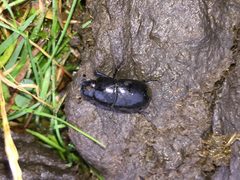
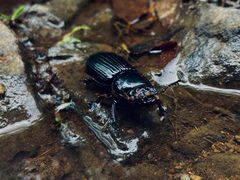
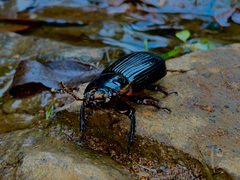
1- Teuchestes fossor(gravedigger dung beetle)
Teuchestes is a of scarab beetles in the Scarabaeidae, established by Mulsant in 1842. The genus comprises approximately 10 described distributed across the Palaearctic, Afrotropical, and Oriental regions. Taxonomic placement has been debated, with some sources treating Teuchestes as a subgenus of Aphodius. Species in this genus are dung beetles associated with decomposing organic matter.
Pronunciation
How to pronounce Teuchestes: /tɛuˈkɛstes/
These audio files are automatically generated. While they are not always 100% accurate, they are a good starting point.
Images
Habitat
Dung beetles in this are associated with decomposing organic matter, including and decaying vegetation. Specific microhabitat preferences vary by .
Distribution
Palaearctic, Afrotropical, and Oriental regions. Records include Europe, Africa, and Asia (including China, Japan, and Southeast Asia).
Ecological Role
As dung beetles, in this contribute to nutrient cycling and soil aeration through burial of and decaying organic matter.
Similar Taxa
- AphodiusTeuchestes has been treated as a subgenus of Aphodius by some authorities (e.g., NCBI ), reflecting close morphological and ecological similarities. Both are -feeding scarab beetles in the Aphodiinae.
More Details
Taxonomic Uncertainty
The rank of Teuchestes remains unsettled. Catalogue of Life and GBIF recognize it as a valid , while NCBI treats it as a subgenus of Aphodius. This reflects ongoing debate in aphodiine classification.
Species Diversity
Ten are currently recognized, with several described relatively recently (T. guangdong and T. hongson in 2012; T. uenoi in 2006), suggesting continued taxonomic work in Asian faunas.