
Tetraclipeoides anomaliceps
(Brown, 1929)
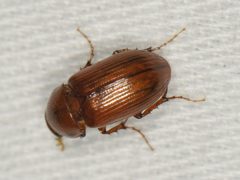
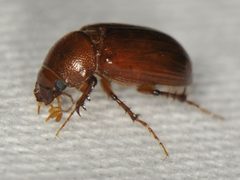
Tetraclipeoides anomaliceps is a of scarab beetle in the Scarabaeidae, Aphodiinae. It was described by Brown in 1929. The species is known from scattered records across the south-central and southwestern United States. As a member of the dung beetle tribe Aphodiini, it is presumed to be associated with decomposing organic matter, though specific ecological details remain poorly documented. The Tetraclipeoides is small and taxonomically obscure, with limited study beyond original descriptions.
Pronunciation
How to pronounce Tetraclipeoides anomaliceps: /ˌtɛtrəˌklɪpiˈɔɪdiːz əˈnɒməlɪˌsɛps/
These audio files are automatically generated. While they are not always 100% accurate, they are a good starting point.
Identification
The Tetraclipeoides can be distinguished from related aphodiine genera by the structure of the , which is divided into four lobes (the source of the genus name). Specific diagnostic features for T. anomaliceps relative to are not readily available in accessible literature. Identification to level likely requires examination of male genitalia and comparison with .
Images
Habitat
Recorded from grassland and prairie regions of the south-central United States, including areas with mixed-grass and short-grass prairie vegetation. Associated with open, relatively dry terrestrial .
Distribution
Documented from Arizona, Kansas, Nebraska, New Mexico, and Texas in the United States. The distribution appears to be restricted to the south-central and southwestern Nearctic region.
Ecological Role
As a member of the Aphodiinae, likely contributes to nutrient cycling through feeding on decomposing organic matter, including and decaying plant material. The includes many that facilitate decomposition and soil aeration.
Similar Taxa
- Other Tetraclipeoides species share the four-lobed structure; -level separation requires detailed morphological examination
- Aphodiini genera with modified clypeusSeveral aphodiine have clypeal modifications; precise generic placement requires knowledge of tribal
More Details
Taxonomic obscurity
Tetraclipeoides anomaliceps is extremely poorly known in the modern literature. The original description by Brown (1929) has not been comprehensively revised, and the has attracted minimal subsequent research attention. The single iNaturalist observation suggests it is rarely encountered or reported by contemporary collectors.
Nomenclatural note
The epithet 'anomaliceps' combines Latin 'anomalus' (irregular) with 'ceps' (from caput, ), referring to unusual head or clypeal structure.