
Otophorus haemorrhoidalis
(Linnaeus, 1758)
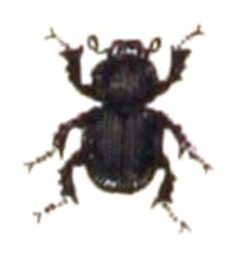
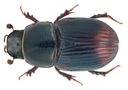
Otophorus haemorrhoidalis is a of dung beetle in the Scarabaeidae, Aphodiinae. It has a broad distribution spanning the Palearctic region (Europe, Asia, and North Africa) and has been introduced to the Nearctic region (North America), where it is established in Canada and the United States. The species is associated with and plays a role in nutrient cycling. Despite its wide distribution, detailed biological studies on this species remain limited.
Pronunciation
How to pronounce Otophorus haemorrhoidalis: //ˌɒtoʊˈfɔːrəs ˌhiːməˌrɔɪˈdeɪlɪs//
These audio files are automatically generated. While they are not always 100% accurate, they are a good starting point.
Images
Habitat
Associated with , including pastureland and areas with livestock or wild herbivore activity.
Distribution
Native to the Palearctic: Albania, Algeria, Armenia, Austria, Azerbaijan, Belarus, Belgium, Bosnia and Herzegovina, Bulgaria, China (Ningxia, Xinjiang, Xizang), Croatia, Czech Republic, Denmark, Estonia, Finland, France, Georgia, Germany, Great Britain, Greece, Hungary, Italy, Japan, Kazakhstan, Korea, Kosovo, Kyrgyzstan, Latvia, Lithuania, Luxembourg, Mongolia, Morocco, Netherlands, Poland, Portugal, Slovakia, Montenegro, Romania, Russia (Far East, Siberia), Serbia, Slovenia, Spain, Sweden, Switzerland, Tajikistan, Turkey, Ukraine, and Uzbekistan. Introduced and established in the Nearctic: Canada (Alberta, British Columbia, Manitoba, New Brunswick, Newfoundland, Nova Scotia, Ontario, Quebec, Saskatchewan) and USA (California, Colorado, Florida, Iowa, Maryland, New Mexico, North Dakota, South Dakota, Texas, Wisconsin). Also recorded from Mexico (Chihuahua, Coahuila, Durango, Nuevo León) in the Neotropical region.
Diet
-feeding; associated with decomposition of herbivore .
Ecological Role
Contributes to decomposition and nutrient cycling in pasture and grassland .
Human Relevance
May provide services in agricultural settings through burial, though specific economic impacts have not been quantified.
More Details
Taxonomic Note
This was originally described by Linnaeus in 1758. It belongs to the Aphodiinae, a of Scarabaeidae often referred to as 'small dung beetles' or 'lesser dung beetles,' which are typically dwellers in rather than active tunnelers.
Invasion History
The has been introduced to North America, where GBIF records indicate establishment across much of Canada and the northern and western United States. The timing and mechanism of introduction are not well documented, but likely occurred through human-assisted transport associated with livestock or shipping.