
Cryptoscatomaseter iowensis
(Wickham, 1913)
Iowa Small Dung Beetle
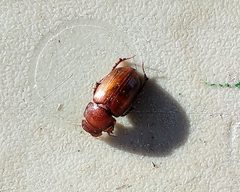
Cryptoscatomaseter iowensis is a small dung beetle in the Scarabaeidae, Aphodiinae. It is known from the central plains of North America, with records from the northern United States and southern Canada. The was described by Wickham in 1913 from Iowa. Like other members of Aphodiinae, it is presumed to be associated with , though specific ecological details remain poorly documented.
Pronunciation
How to pronounce Cryptoscatomaseter iowensis: /ˌkrɪptəsˌkætəˈmeɪstər aɪˈoʊˌɛnsɪs/
These audio files are automatically generated. While they are not always 100% accurate, they are a good starting point.
Identification
Members of the Cryptoscatomaseter are small aphodiine dung beetles. The C. iowensis can be distinguished from by subtle differences in male genitalia and possibly by geographic distribution, though published diagnostic features are limited. The genus is characterized by small body size and reduced wing venation compared to larger scarabaeids. Specific external morphological characters distinguishing C. iowensis from related species are not well documented in accessible literature.
Images
Habitat
Prairie and grassland of the central North American plains. Associated with open where ungulate is available.
Distribution
Nearctic region: Canada (Alberta, Manitoba, Saskatchewan) and United States (Illinois, Indiana, Iowa, Kansas, Nebraska, North Dakota, South Dakota, Wisconsin). The name reflects its type locality in Iowa.
Ecological Role
As a member of Aphodiinae, likely contributes to decomposition and nutrient cycling in prairie . Specific ecological functions have not been studied.
Human Relevance
No documented direct interactions with humans. The is of potential interest to biodiversity monitoring in prairie conservation efforts.
Similar Taxa
- Other Cryptoscatomaseter species share small size and aphodiine ; differentiation requires examination of male genitalia and geographic range.
- Small Aphodiinae in the tribe AphodiiniMany small dung beetles in this tribe overlap in general appearance; precise identification to and requires knowledge and dissection.
More Details
Taxonomic History
Originally described by Wickham in 1913, placed in Cryptoscatomaseter. The genus is relatively small and poorly studied, with most known from limited material.
Data Deficiency
This is extremely poorly known in the scientific literature. Only one observation is recorded in iNaturalist, and detailed biological studies appear to be lacking.