
Alloblackburneus aegrotus
(Horn, 1870)
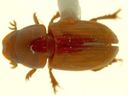
Alloblackburneus aegrotus is a small dung beetle in the Scarabaeidae, Aphodiinae. The was described by Horn in 1870 and is currently placed in the Alloblackburneus, a group of aphodiine scarabs associated with decomposition. Records indicate a restricted distribution in the southeastern and mid-Atlantic United States. The species remains poorly documented in the scientific literature.
Pronunciation
How to pronounce Alloblackburneus aegrotus: /ˌæloʊˌblækˈbɜrn.iːəs iːˈɡroʊtəs/
These audio files are automatically generated. While they are not always 100% accurate, they are a good starting point.
Identification
The Alloblackburneus comprises small aphodiine scarabs that can be distinguished from related genera by specific genitalic and external morphological characters. -level identification requires examination of male genitalia and detailed comparison with . No field-identifiable characters have been published for distinguishing A. aegrotus from other Alloblackburneus species.
Images
Distribution
Southeastern and mid-Atlantic United States: Alabama, Florida, Maryland, Mississippi, New Jersey, and North Carolina. The has not been recorded outside this region.
Ecological Role
As a member of Aphodiinae, this likely participates in decomposition and nutrient cycling, though direct ecological studies are lacking.
Similar Taxa
- Alloblackburneus speciesOther in the share similar size and general aphodiine ; definitive separation requires dissection and examination of male genitalia.
- Other Aphodiinae generaSmall aphodiine scarabs in such as Ataenius and Aphodius can appear superficially similar; Alloblackburneus is distinguished by specific structural characters of the , pronotum, and genitalia.
More Details
Taxonomic history
Originally described by Horn in 1870, this has undergone generic reclassification. The Alloblackburneus was established to accommodate species previously placed in related aphodiine genera based on phylogenetic and morphological studies.
Data scarcity
Only 4 observations are recorded in iNaturalist, and the lacks a dedicated Wikipedia entry. Published biological information beyond original description and taxonomic treatments appears minimal.