
Pleocoma oregonensis
Leach, 1933
Oregon rain beetle
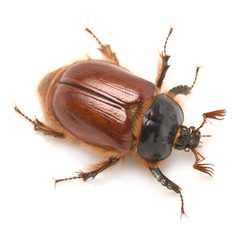
Pleocoma oregonensis is a rain beetle in the Pleocomidae, to the Pacific Northwest region of North America. As with other members of this family, it exhibits autumnal patterns correlated with rainfall events. The was described by Leach in 1933 and is one of approximately 30 described species in the Pleocoma.
Pronunciation
How to pronounce Pleocoma oregonensis: /ˌpliːəˈkoʊmə ˌɔrɪɡəˈnɛnsɪs/
These audio files are automatically generated. While they are not always 100% accurate, they are a good starting point.
Identification
Differs from other Pleocoma by geographic distribution; P. oregonensis is restricted to Oregon and Utah, whereas most occur in California. males have distinctive with elongated clubs. Females are flightless with reduced wings and enlarged legs adapted for burrowing.
Images
Habitat
Found in montane and foothill regions of the Pacific Northwest. Associated with coniferous forest soils where larvae develop.
Distribution
to the Nearctic region; recorded from Oregon and Utah, United States.
Seasonality
emerge during autumn rains, typically October to November. Activity is strongly correlated with precipitation events.
Life Cycle
Complete with prolonged larval development. Larvae are soil-dwelling and feed on decaying organic matter and roots. do not feed; their mouthparts are reduced or non-functional. Males fly during rainy evenings to locate flightless females at burrow entrances.
Behavior
Males exhibit and activity triggered by rainfall. Females remain in burrows near the soil surface, emitting to attract males. Both sexes are incapable of feeding as .
Ecological Role
Larvae contribute to soil nutrient cycling through burrowing and processing of organic material. serve as a seasonal food source for vertebrate including birds and small mammals.
Similar Taxa
- Pleocoma hirticollisOverlaps in Oregon range; distinguished by male genitalic and subtle differences in antennal club structure
- Pleocoma marquaiAnother Oregon ; requires examination of male parameres for definitive separation