
Pleocoma
LeConte, 1856
rain beetles
Species Guides
26- Pleocoma australis(Southern Rain Beetle)
- Pleocoma badia(rain beetle)
- Pleocoma behrensii(rain beetle)
- Pleocoma bicolor(rain beetle)
- Pleocoma blaisdelli(rain beetle)
- Pleocoma carinata
- Pleocoma conjungens(Santa Cruz Rain Beetle)
- Pleocoma crinita(rain beetle)
- Pleocoma dubitabilis(rain beetle)
Pleocoma is the sole extant of Pleocomidae, a to the Pacific states of North America. These beetles are notable for their extreme subterranean lifestyle, with emerging only during fall and winter rains to mate. The genus name derives from Greek words for 'abundant hair,' referring to the dense hair covering. Adults are non-feeding, while larvae are root-feeders with exceptionally long development periods of up to 13 years.
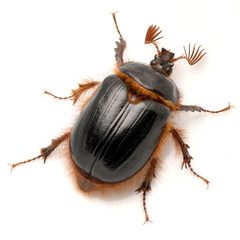
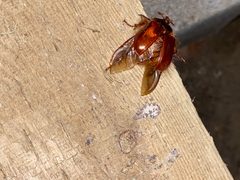
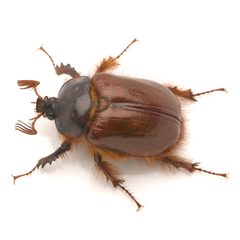
Pronunciation
How to pronounce Pleocoma: //pliːoʊˈkoʊmə//
These audio files are automatically generated. While they are not always 100% accurate, they are a good starting point.
Identification
Distinguished from other scarabaeiform beetles by the combination of: 11-segmented with 4-8 (more than any other Scarabaeoidea); dense hair covering extending to legs and body margins; wings in females; and tied to rainfall. The non-functional and closed in are diagnostic internal features. Similar scarab beetles lack the extreme antennae and dense ventral pilosity.
Images
Appearance
Robust oval body form typical of scarabaeiform beetles. surface hairless and , ranging from black to reddish-brown. surface densely covered with fine, long hairs extending to legs and margins of and ; hair color ranges from yellow to red to black. 11-segmented with club of four to eight , more than any other Scarabaeoidea group. Females possess only wings; males have functional wings.
Habitat
Mediterranean-type climates with distinct winter rainy seasons. emerge to surface only during or immediately after rainfall. Larvae inhabit soil, often deep beneath plants, feeding on roots. Associated with various plant including coniferous forests where some occur as pests of Christmas trees.
Distribution
to Pacific states of North America: California, Oregon, and Washington. Fossil remains from the Yixian Formation in China indicate the existed in similar form since at least the Cretaceous period.
Seasonality
emerge with onset of fall/winter rainy season, typically October through March depending on and location. Some species active as late as early spring. Activity period for individual may be extremely brief—some species fly on only a single day per year when specific triggering conditions are met.
Diet
do not feed; are non-functional and opening is closed. Larvae feed on roots of plants in soil, often at considerable depth.
Life Cycle
Larvae have C-shaped scarabaeiform bodies, creamy white coloration. Nine or more instars reported. Development period exceptionally long: up to 13 years to maturity. occurs in late summer. dig to surface after pupation.
Behavior
Males fly during rainfall, often in large numbers, homing in on female . Females remain in or near burrow entrances, releasing pheromones to attract males. Mating occurs on surface or within female-dug burrow. Females lay at bottom of burrow. Males strongly attracted to bright lights. activity strictly tied to specific weather conditions including precipitation, temperature, and possibly barometric pressure changes.
Ecological Role
Larvae act as root herbivores, potentially influencing plant composition through belowground feeding. function solely as reproductive agents with no feeding role. Long and synchronous may represent satiation strategy.
Human Relevance
Some are minor pests of Christmas trees and other conifers through larval root feeding. Males attracted to outdoor lighting may cause minor nuisance. Primarily of scientific interest due to unique phylogenetic position as sister group to all other Scarabaeoidea and relictual distribution.
Similar Taxa
- Geotrupidae (earth-boring dung beetles)Formerly classified together; distinguished by fewer antennal , functional mouthparts, and different timing not tied to rainfall
- Scarabaeidae (scarab beetles)Share scarabaeiform body plan; distinguished by fewer antennal , functional in , and typically different activity periods
More Details
Evolutionary significance
Pleocomidae is considered the sister group to all remaining of Scarabaeoidea, making it phylogenetically significant for understanding scarab beetle evolution. Fossil evidence from China indicates the has persisted in recognizable form for over 100 million years.
Population biology
The stringent environmental triggers required for result in extreme synchronization within , with some active for only a single day annually. This represents one of the most temporally restricted adult activity periods known in insects.
Sources and further reading
- BugGuide
- Wikipedia
- GBIF taxonomy match
- iNaturalist taxon
- NCBI Taxonomy
- Catalogue of Life
- A Review of the Taxonomic and Distributional Relationships of Pleocoma hoppingi Fall and Pleocoma rubiginosa Hovore (Coleoptera: Scarabaeidae)
- A new host record and first report of Pleocoma dubitabilis dubitabilis Davis (Coleoptera: Pleocomidae) as a pest of Christmas trees