
Pleocoma conjungens
Horn, 1888
Santa Cruz Rain Beetle
Species Guides
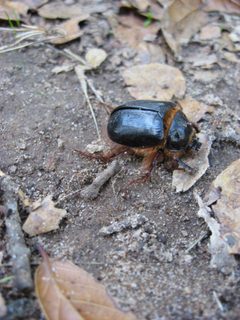
1Pleocoma conjungens, the Santa Cruz Rain Beetle, is a of rain beetle to the coastal mountains of central California. emerge during autumn and winter rains, with males flying to seek flightless females. The species belongs to the Pleocomidae, a small group of scarab beetles restricted to western North America. Like other rain beetles, it is poorly studied and has a lifestyle as larvae.
Pronunciation
How to pronounce Pleocoma conjungens: /pliːˈoʊ.kə.mə kənˈdʒʌn.dʒɛnz/
These audio files are automatically generated. While they are not always 100% accurate, they are a good starting point.
Identification
Distinguished from other Pleocoma by geographic range (Santa Cruz Mountains region) and subtle morphological features of male genitalia. Males recognized by presence of functional wings; females by absence of wings and forelegs. Separated from other scarab by combination of dense body hair, autumn-winter during rains, and male-only .
Images
Appearance
are robust, hairy scarab beetles. Males have fully developed wings and functional , while females are flightless with reduced, non-functional wings. Body covered with dense setae. with clubs typical of scarabs. Coloration generally dark brown to black.
Habitat
Coastal scrub and mixed evergreen forest in the Santa Cruz Mountains of California. surface during heavy rains. Larvae live in deep soil burrows, feeding on roots.
Distribution
to the Santa Cruz Mountains and adjacent coastal ranges of central California, from approximately Santa Cruz County north to southern San Mateo County.
Seasonality
active from October through February, with peak during heavy autumn and winter rains. Activity ceases during dry periods.
Life Cycle
Complete with prolonged larval stage. Larvae are , living in deep soil chambers and feeding on plant roots for multiple years. occurs in soil. emerge during rains, mate, and females return underground to lay . Adult lifespan brief, likely days to weeks.
Behavior
Males fly during rainfall, often in large numbers, seeking females. Females remain near burrow entrances or on ground surface, releasing to attract males. Both sexes are to . do not feed. Strongly precipitation-dependent pattern.
Ecological Role
Larvae act as root herbivores, though impact on vegetation unknown. serve as food source for vertebrate during brief period. Soil excavation by larvae may contribute to soil aeration.
Human Relevance
Occasionally encountered by hikers and naturalists during winter rains in Santa Cruz Mountains. Not an agricultural pest. Subject of interest due to unusual and limited distribution.
Similar Taxa
- Pleocoma hirticollisOverlapping range in central California; distinguished by male genitalia and subtle differences in setal .
- Pleocoma minorSmaller in California; P. conjungens generally larger with different male antennal structure.
More Details
Conservation Status
Not formally assessed. Restricted range and loss in Santa Cruz Mountains may pose threats, but data insufficient.
Research Needs
Larval , plant associations, and poorly known. Difficult to study due to subterranean lifestyle and unpredictable .