
Xenochodaeus
Paulsen, 2007
Species Guides
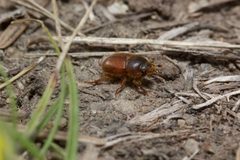
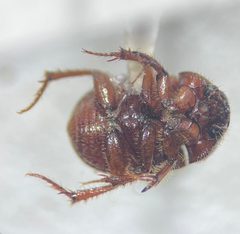
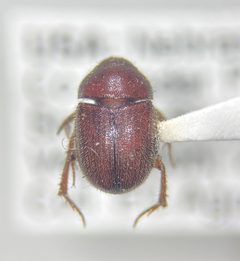
6Xenochodaeus is a of scarab beetles in the Ochodaeidae, described by Paulsen in 2007. The genus comprises six described distributed in North America. Members are commonly referred to as sand-loving scarab beetles, reflecting their association with sandy . The genus was established relatively recently, with species previously assigned to other genera.
Pronunciation
How to pronounce Xenochodaeus: //ˌzɛnəkəʊˈdiːəs//
These audio files are automatically generated. While they are not always 100% accurate, they are a good starting point.
Identification
Xenochodaeus can be distinguished from related in Ochodaeidae by a combination of morphological features established by Paulsen (2007), though specific diagnostic characters are not detailed in available sources. The genus contains small to medium-sized scarab beetles. For precise identification to level, examination of male genitalia and other subtle morphological traits is typically required in this .
Images
Habitat
Associated with sandy , as indicated by the common descriptor "sand-loving." Specific microhabitat preferences within sandy environments (e.g., dunes, riverbanks, coastal or inland sands) are not well documented in available sources.
Distribution
Nearctic region, with records from North America. -level distributions vary: X. americanus, X. luscinus, X. musculus, X. planifrons, X. simplex, and X. ulkei are all described from North American localities.
Similar Taxa
- OchodaeusType of Ochodaeidae; Xenochodaeus was separated from Ochodaeus based on morphological differences established by Paulsen (2007)
- Other Ochodaeidae genera contains multiple of similar small scarab beetles; precise distinctions require examination of detailed morphological characters
More Details
Taxonomic history
The was erected by Paulsen in 2007 to accommodate previously placed in other genera, particularly Ochodaeus. This reclassification reflects ongoing refinement of phylogenetic relationships within Ochodaeidae.
Species diversity
The six described are: X. americanus (Westwood, 1852), X. luscinus (Howden, 1968), X. musculus (Say, 1835), X. planifrons (Schaeffer, 1906), X. simplex (LeConte, 1854), and X. ulkei (Horn, 1876). Species epithets date to 19th and early 20th century descriptions, indicating long recognition of these prior to generic reassignment.