
Lichnanthe
Burmeister, 1844
Lichnanthe, bumble bee scarab beetles
Species Guides
6- Lichnanthe albipilosa(White Sand Bear Scarab Beetle)
- Lichnanthe apina(bumble bee scarab beetle)
- Lichnanthe brusti
- Lichnanthe rathvoni(bumble bee scarab beetle)
- Lichnanthe ursina(Bumblebee Scarab)
- Lichnanthe vulpina(cranberry root grub)
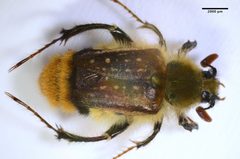
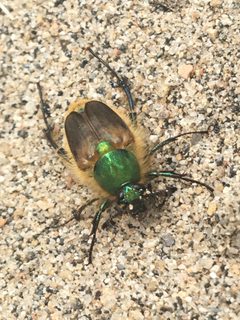
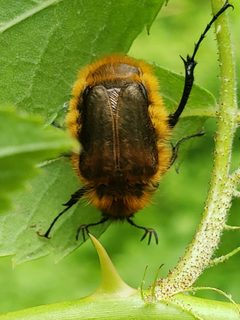
Lichnanthe is a of scarab beetles in the Glaphyridae, commonly known as bumble bee scarab beetles. The genus contains approximately 10 described distributed in North America. Members are known for their resemblance to bumble bees, an apparent case of mimicry. The genus was established by Burmeister in 1844.
Pronunciation
How to pronounce Lichnanthe: //lɪkˈnænθi//
These audio files are automatically generated. While they are not always 100% accurate, they are a good starting point.
Identification
in this are distinguished from other Glaphyridae by their -like appearance, with dense creating yellow and black color patterns. Specific identification to species level requires examination of genitalia and other microscopic characters. Lichnanthe vulpina is known as the cranberry root , and Lichnanthe ursina is specifically called the bumblebee scarab.
Images
Distribution
Nearctic region; recorded from the United States, including Vermont.
Host Associations
- cranberry - root feedingLichnanthe vulpina specifically associated with cranberry as root
Human Relevance
Lichnanthe vulpina, known as the cranberry root , has been documented as a pest of cranberry crops due to root-feeding damage.
Similar Taxa
- Glaphyridae (other genera)Other glaphyrid beetles lack the distinctive mimicry and dense pattern seen in Lichnanthe.
- Bombus (bumble bees)Visual mimicry creates superficial resemblance, but Lichnanthe has hardened forewings () and , distinguishing it from true bumble bees.
More Details
Species diversity
The includes 10 described : L. albipilosa, L. apina, L. brachyscelis, L. cooperi, L. defuncta, L. lupina, L. rathvoni, L. ursina, and L. vulpina.