
Berosus sayi
M.Hansen, 1999
Berosus sayi is a of water scavenger beetle in the Hydrophilidae, native to North America. First described by Thomas Say in 1825 as Berosus striatus, it was later renamed Berosus sayi by Hansen in 1999. The species is characterized by a distinctive morphological trait in females: a small tooth on the near the apex of each .
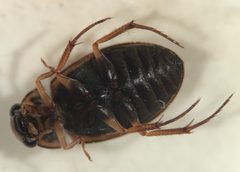
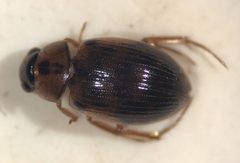
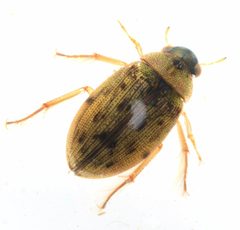
Pronunciation
How to pronounce Berosus sayi: //ˈbɛr.o.səs ˈseɪ.aɪ//
These audio files are automatically generated. While they are not always 100% accurate, they are a good starting point.
Identification
Females can be distinguished from similar Berosus by the presence of a small tooth on the near the apex of each . This trait is not present in all and serves as a key diagnostic feature.
Images
Habitat
Aquatic environments; typical of hydrophilid beetles, which inhabit freshwater .
Distribution
Native to the United States and Canada. Recorded from Canadian provinces including Alberta, British Columbia, Manitoba, New Brunswick, Nova Scotia, Northwest Territories, Ontario, Prince Edward Island, Quebec, and Saskatchewan; and U.S. states including Alabama, California, Connecticut, Florida, Georgia, Iowa, Idaho, Illinois, Indiana, Massachusetts, Maryland, Maine, Michigan, Minnesota, Mississippi, New Hampshire, New York, Oregon, Rhode Island, South Carolina, Washington, and Wisconsin.
Ecological Role
Member of aquatic ; hydrophilid beetles generally function as scavengers and in freshwater , though specific ecological role for this is not documented.
Similar Taxa
- Berosus striatusJunior synonym; originally described by Thomas Say in 1825, now treated as with B. sayi
- Other Berosus speciesFemales of B. sayi can be separated by the small tooth on the elytral near the apex, a trait not universally present in
Sources and further reading
- BugGuide
- Wikipedia
- GBIF taxonomy match
- iNaturalist taxon
- NCBI Taxonomy
- From Caterpillars to Butterflies to Chronic Pain Research | Bug Squad
- Bruce Hammock: From ResearchIng Insect Science to Researching Autism and Schizophrenia | Bug Squad
- Bug Eric: Stop Saying the Monarch is a "Gateway Species" for an Appreciation of Other Insects
- Bug Eric: Spider Sunday: Funnel-web Wolf Spiders
- Termite Experts Attempt to Solve Taxonomic Cold Cases
- New comment policy | Beetles In The Bush